
RESEARCH AS PARTICIPATORY ART PERFOMANCE
BREAK THE BREAD:
Participatory art performance “BREAK THE BREAD”, a timely reflection on the contemporary world of conflict and division. The experience invites participants to confront the complexities of human relationships and reconciliation through a shared, intimate act — breaking bread together.
In an era when many nations are hostile to one another, it is important to challenge ourselves and move beyond propaganda, stereotypes and historical grievances. “BREAK THE BREAD” confronts these realities by creating a space where participants are asked to make a deeply personal and symbolic gesture — to feed their “enemy”.
Sitting around a dining table, four participants, each representing a fictional nation, will share a meal. However, due to their interdependence, they will not be able to feed themselves. Instead, each participant will be fed by the person sitting across from them. This simple yet profound act raises the question: can we put aside our differences and care for those we consider our adversaries?
Since each person today is often perceived not as themselves, but as a representative of their country of citizenship or origin, this performance explores the power of human connections beyond national identity. The act of feeding becomes more than just sustenance — it is a gesture of empowerment of another person that transcends nationality and conflict.
This act offers four spaces for participants, making it an intimate and exclusive experience. We encourage those wishing to participate to book in advance. Please note that only those with reserved participation tickets will be admitted to the performance. However, anyone interested is welcome to attend as an audience member and witness this poignant exploration of empathy and reconciliation.
Diretor: Ekaterina Belukhina
ITTERATION 1
ITTERATION 2
Art Reflection on Modern Conflict
By Ekaterina Belukhina & Gemma La Guardia
As the world seems to be teetering on the brink of a series of uncontrollable conflicts in Russia, Ukraine, Iran, Israel and Gaza, and many other places, art can give an alternative lens through which to think about how we’ve gotten here.
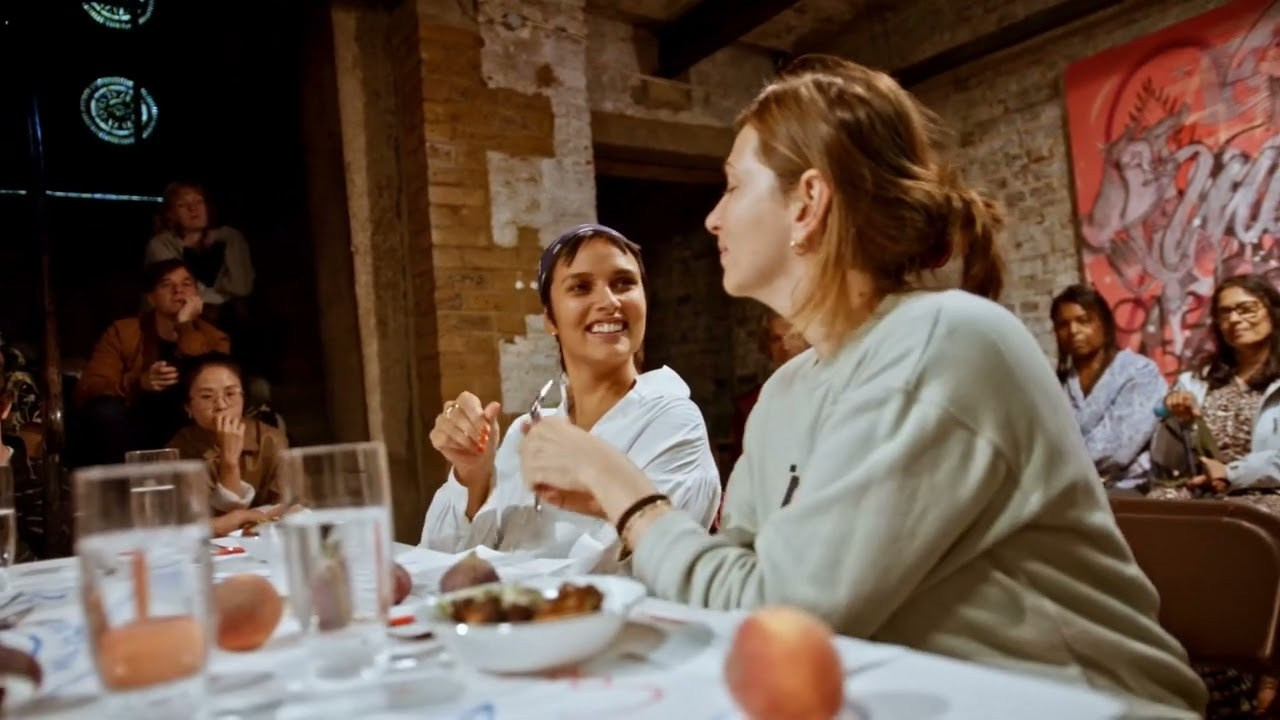
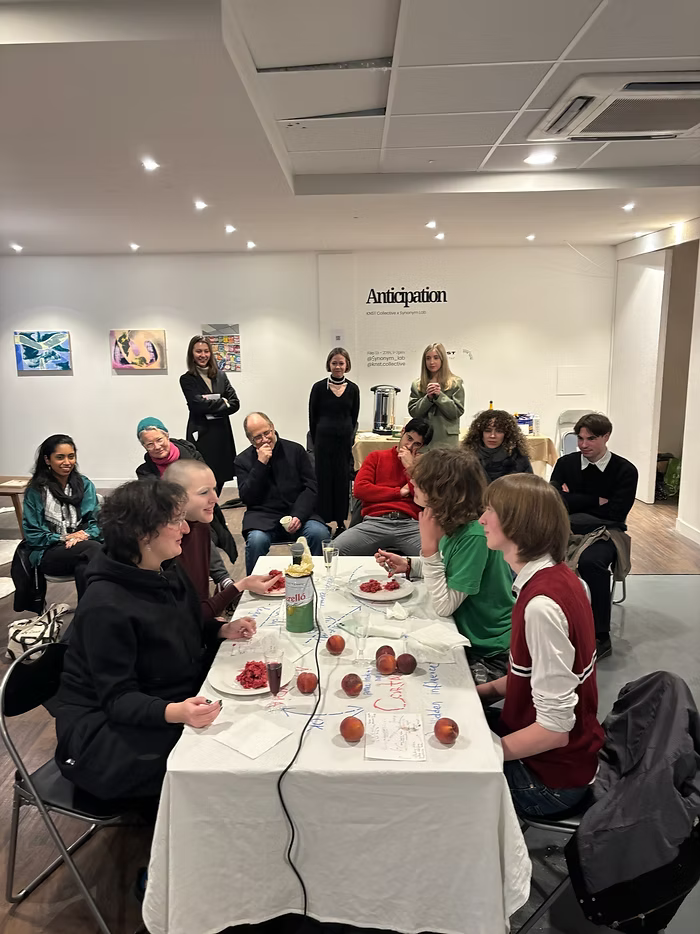
Anyone sitting around a family dinner table knows it can become a “war zone”. But, as we watched the scene unfold in front of us, we hadn’t expected how much a simple dinner could deteriorate. Ekaterina’s performance piece, co-produced by Gemma’s KNST Collective,"BREAK THE BREAD” started as a simple idea: put people at a table, tell them they represent different countries, and give them one rule — you can’t feed yourself. Your “enemy” across the table has to feed you.The performance explores the possibility of reconciliation between participants representing fictional warring countries. Over dinner, the producers would appear before the diners and the audiences to read out newsflashes that mirrored actual reports from real-world conflicts, such as civilian bombings or trade wars. While being bombarded with incendiary news reports, the participants were increasingly reliant on their feeding partners more intimately. Meanwhile, their cutlery started disappearing piece by piece, a seemingly unimportant resource until you don’t have anything to eat risotto with.
During two separate performances, a troubling pattern emerged. These were just made-up countries — fictional places with fictional problems. But within seconds, dinner table guests turned into stern-faced diplomats, morphing from individuals into representatives of their fictional states. Someone would read out news about a missile strike or a border dispute, and suddenly, the spoons would slow down. We watched hands hesitate, eyes narrow. The simple act of feeding another person became political.
The performance’s central mechanism — the inability to feed oneself — creates a forced interdependence that exists in our real world, though often invisible to us. Nations, like people, cannot truly sustain themselves in isolation. We rely on global trade, shared resources, and cultural exchange. Yet, like the participants who sometimes withheld food from opposing diners, despite their own hunger, nations often choose mutual suffering over cooperation. As such, the cutlery came to represent the infrastructure through which we enact this interdependence. As in the real world, the tension between wanting to finish one’s dinner, and the intimacy of being fed by someone else’s fork; combined with the quickening pace of divisive newsflashes, led to the formation of alliances to feed each other across the table, and the increase in trade value of other resources to offset the loss of the highly prized cutlery, such as alcohol, napkins and even the decorative nectarines.
Wars Echo Wars
A striking observation emerges when we examine how people process different conflicts. Yet war, at its core, is still a war, regardless of your political affiliations. All wars include the fundamental horrors and human suffering that we must first acknowledge before delving into nuances.
The events following October 7th in Israel and Gaza illustrate this complexity. While the response by Israel to Gaza might be understood by many Israelis as a logical consequence of unprecedented attacks, the human ability to rationalize such escalation in one conflict while being horrified by similar actions of Ukraine in Russian territory reveals our own biases and emotional entanglements.
As someone personally touched by both the Russian-Ukrainian and Israeli-Palestinian conflicts, Ekaterina notes her own contradictions. How can one understand certain military responses in one context while feeling deep unease about similar actions in another? When news emerges about military actions by Ukraine on Russian territory, there is no satisfaction, despite her opposition to the war in Ukraine. This personal contradiction mirrors a broader human tendency to process conflicts differently when we feel personally invested in them — horror at what happens to one nation, anger at another, and sometimes, indifference.
Becoming Your Flag
Perhaps the most revealing aspect of “BREAK THE BREAD” was how quickly participants began to internalize their assigned national identities. Even in this fictional setting, they didn’t just act as representatives. They started to align emotionally with the interests of “their country.” When news of a hospital bombing was announced, the participant representing the accused nation wasn’t questioned — they were met with hostility. But on the flipside, participants would justify actions from their “country” that they’d condemned minutes earlier when someone else perpetrated them, highlighting the mental gymnastics we do to make sense of violence when it’s “our side” doing it.
Remarkably, participants began raising personal grievances and incorporating them as defining traits of their fictional national identities. It wasn’t about judging actions, it was about picking sides. Francis Fukuyama argues that the weakening of strong governing institutions leads to an erosion of shared civic values, causing people to factionalise along national, religious, or sectarian lines.
Another observation was that while we presented the news items without contradictory reporting, not a single participant questioned their authenticity or objectivity. This observation reinforces our premise as performance creators that all news inherently functions as propaganda, regardless of its perceived objectivity.
A potential area for further exploration was that all the participants were either Gen Z or Millennials. As Millennials ourselves, identity politics was considered fringe politics for most of our childhoods, but growing into adulthood it has become our modus operandi, particularly on social media. If we ran it with older generations, would the experiment have run any differently?
In our own world, as in the performance, individuals become one-dimensional ambassadors of their nations' actions. A Palestinian student must answer for actions they never endorsed. A Russian artist faces a boycott for their government’s decisions. We forget that nationality is assigned randomly at birth, not chosen. The performance reminded us of news clips where reporters stick microphones in people’s faces in search of a “gotcha!” moment: “As a Russian, what do you think about Ukraine?” It’s almost as if the passport you carry determines the thoughts you’re allowed to have.
Worse still, identity politics comes to justify the most horrific of crimes. A frequently heard sentiment across Israeli media is that there is not one innocent Palestinian in Gaza — they all support Hamas’ actions. Likewise on the other side of the floor — all Israelis are complicit.
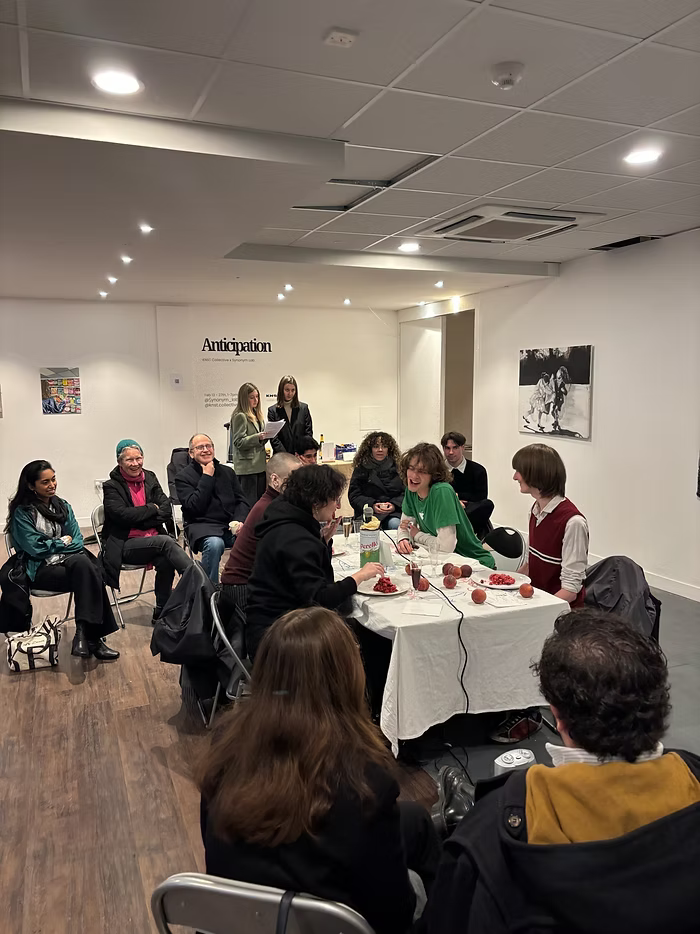
“Break the Bread”
This climax of the performance leads to our unwitting participants breaking a loaf of bread wrapped as a gift and sharing it between them in a symbol of peace and reconciliation, only that it didn’t work out that way. By the time we got to the end of the show, in a Lord of the Flies-esque debacle, the participants were so factionalised that a rogue state was not given any bread by the other participants, despite the producers extending the show to wait for them to reach a consensus. It never quite arrived.What we had hoped would be a heartwarming show that, by the end, would demonstrate that peace, reconciliation, and human good nature had the potential to resolve conflicts, became a microcosm of today’s world instead. International trade wars broke out, alliances were made and broken, rogue states emerged. Were our participants inherently evil? No — rather, when we interviewed them at the end of the performance, they confessed they would never have behaved like that in “real life”, they were just representing their countries! They had assumed they had to play politics.
Social scientists identify this as 'demand characteristics'—the tendency of research participants to modify their behavior based on their perception of the study’s purpose. Yet this concept extends far beyond experimental settings. The same fundamental mechanism—adjusting our behavior to meet perceived expectations—operates constantly in our daily lives through what we recognize as social norms, social roles, and self-fulfilling prophecies. In this sense, society itself functions as the “experimenter” and all of us respond to its subtle and explicit cues, whether consciously aware of them or ot.
Looking in the Mirror
These staged conflicts are children’s games compared to Gaza, Ukraine, and other bleeding parts of our world. But they show us something important: how easily we slip into seeing people as walking flags rather than human beings. In our performance, participants started identifying with their fictional in-groups within about 10 minutes of the performance starting. The ramifications are a slippery slope — In the case of the Gaza war, on one side, the real suffering of Palestinians become a simulacra for virtue signalling online, losing their dignity again as their hopes and dreams are stripped and reduced to images to be reposted for maximum shock factor. Similarly, Israelis are reduced to the ravings of right wing settlers talking heads. And vice versa: Palestinians are reduced to Hamas fighters waving AK47’s and pulling blood soaked Israeli women out of cars, while patriotic Israelis shelter from rocket fire. The human aspect and the reality of the horrors of war is lost, we fall deeper into our echo chambers, images used to entrench ourselves further onto our own sides.
The cherry picking of identity politics spills out from the internet into real life, where we are unable to engage with the other side on a human level. As we sink deeper into our voyeuristic echo chambers, a question arises — Are we forgetting that we are all three-dimensional people, not just the representative of whatever faction we belong to (nation, ethnicity, fandoms etc…)? Daniel Taub, in his book, Beyond Dispute, points out that while technology has taken the barriers away to engaging with anyone, anywhere, in a time such as the 21st century where we face multiple critical challenges, like climate change, wars and the advance of AI, we have unlearned the skills to talk and disagree effectively with each other.
There’s no easy fix here. The wounds are real, the grievances have roots, and the pain cuts deep. But maybe if we can see how quickly we build these walls even in a staged performance, we might catch ourselves doing it in real life.
ITTERATION 3

People were more open when there wasn’t a crowd — people didn’t feel that they were put under a spotlight
Last time people felt they were acting because that was the role they were given
Key question: how does the experience reflect real world politics?
More dialogue this time
More focus on trade
Questioning narratives rather than accepting at face value
Conspiracy theories
What was different?
Different people, characters etc ….
ITTERATION 4
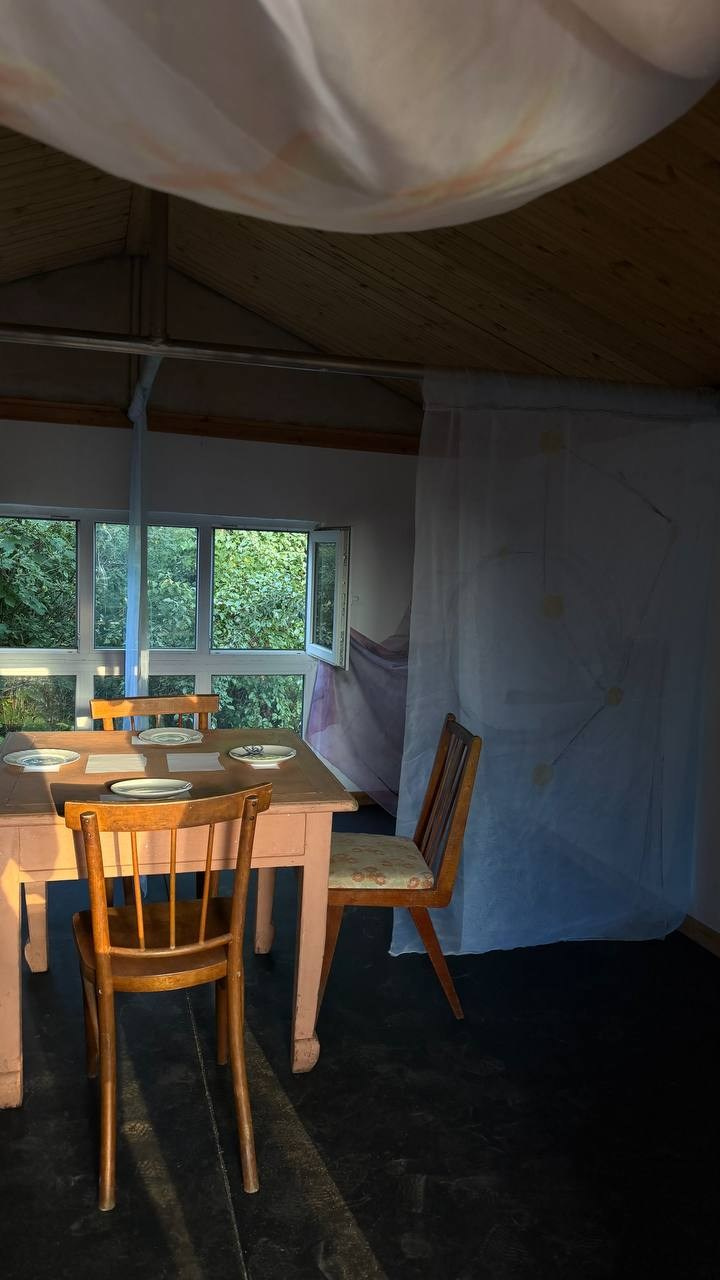
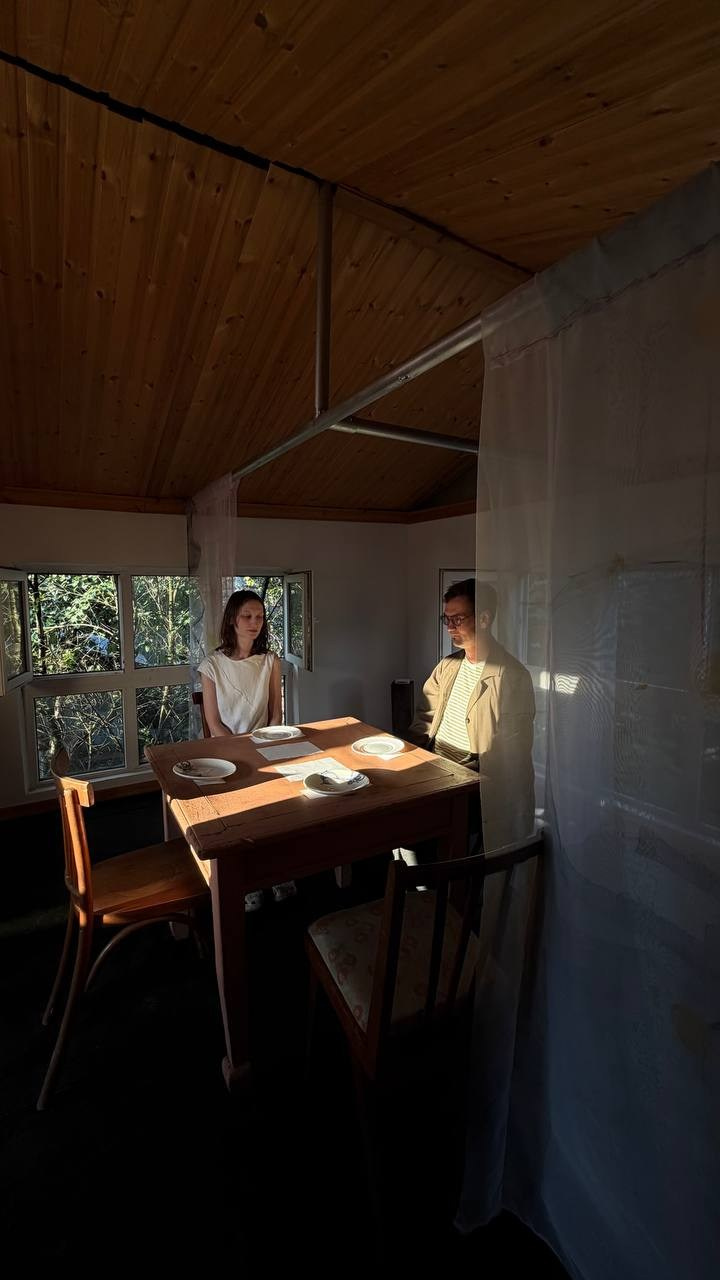
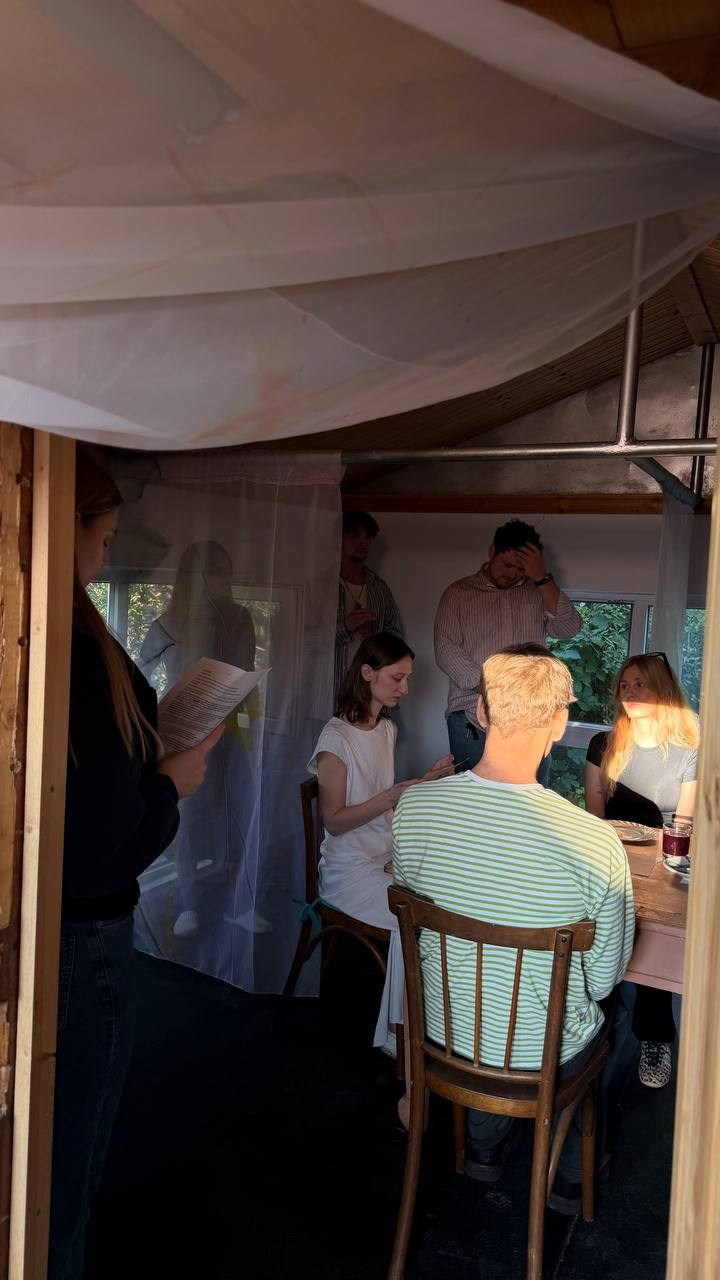
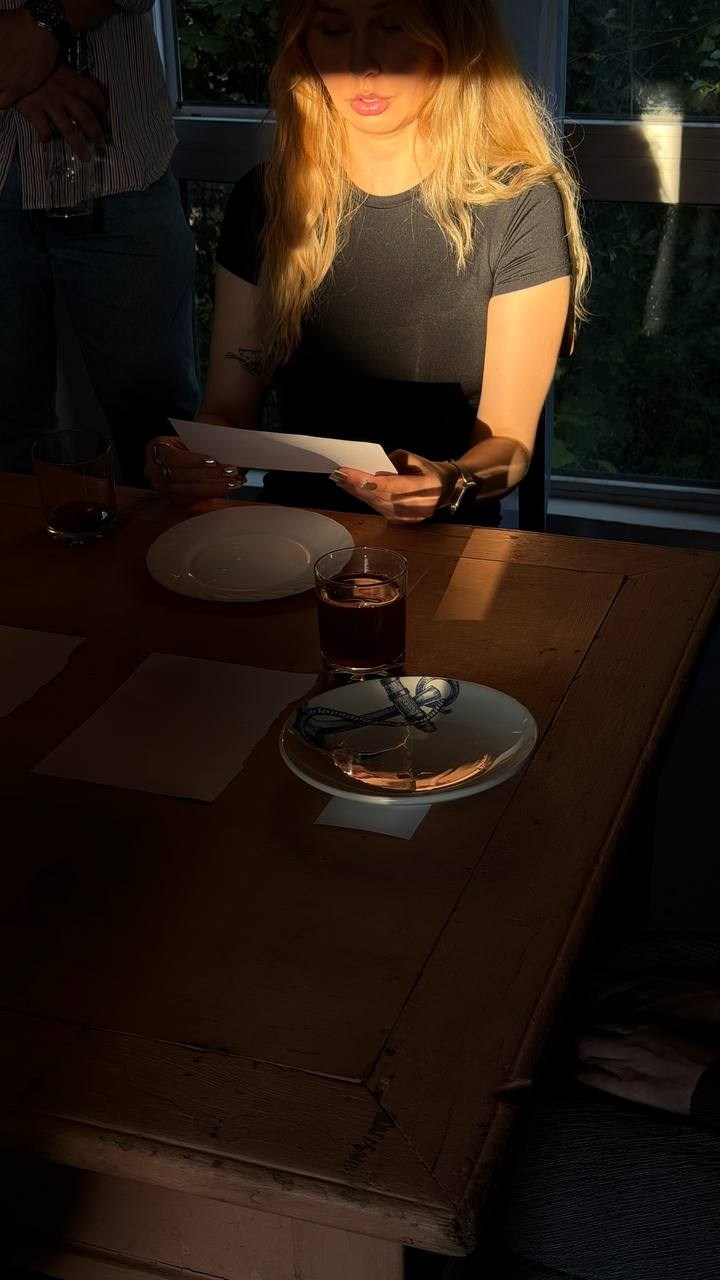
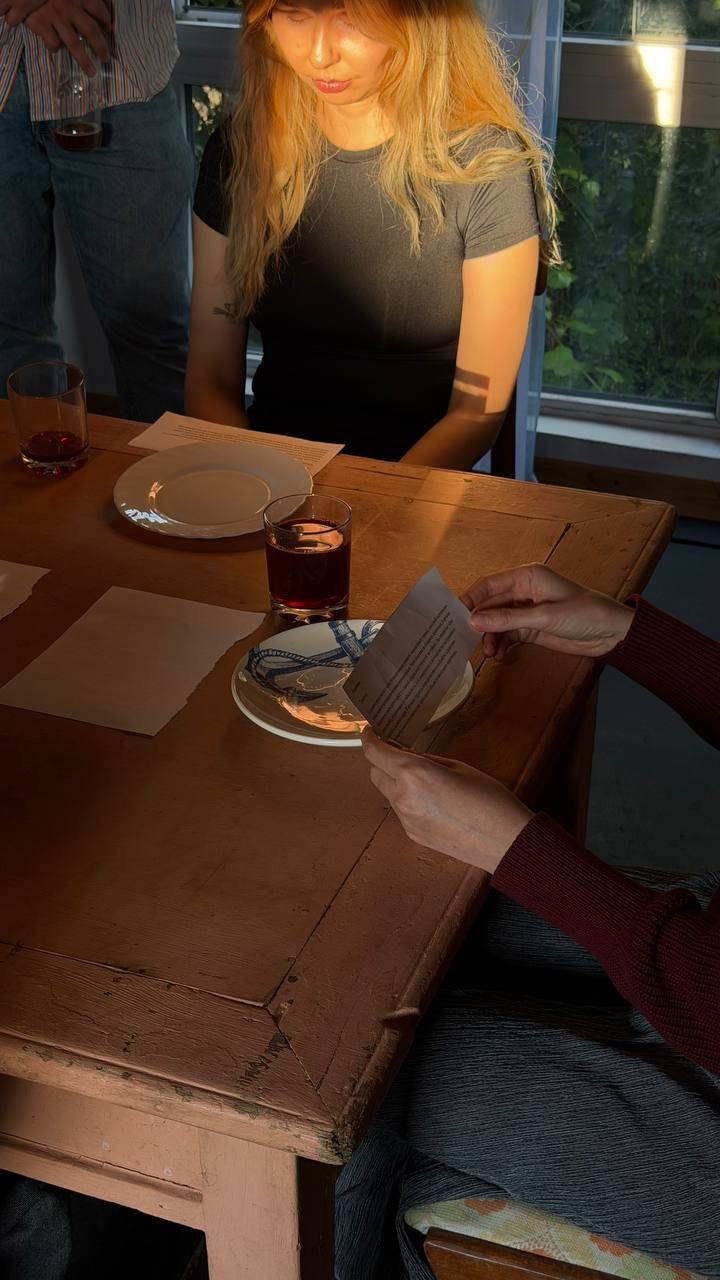
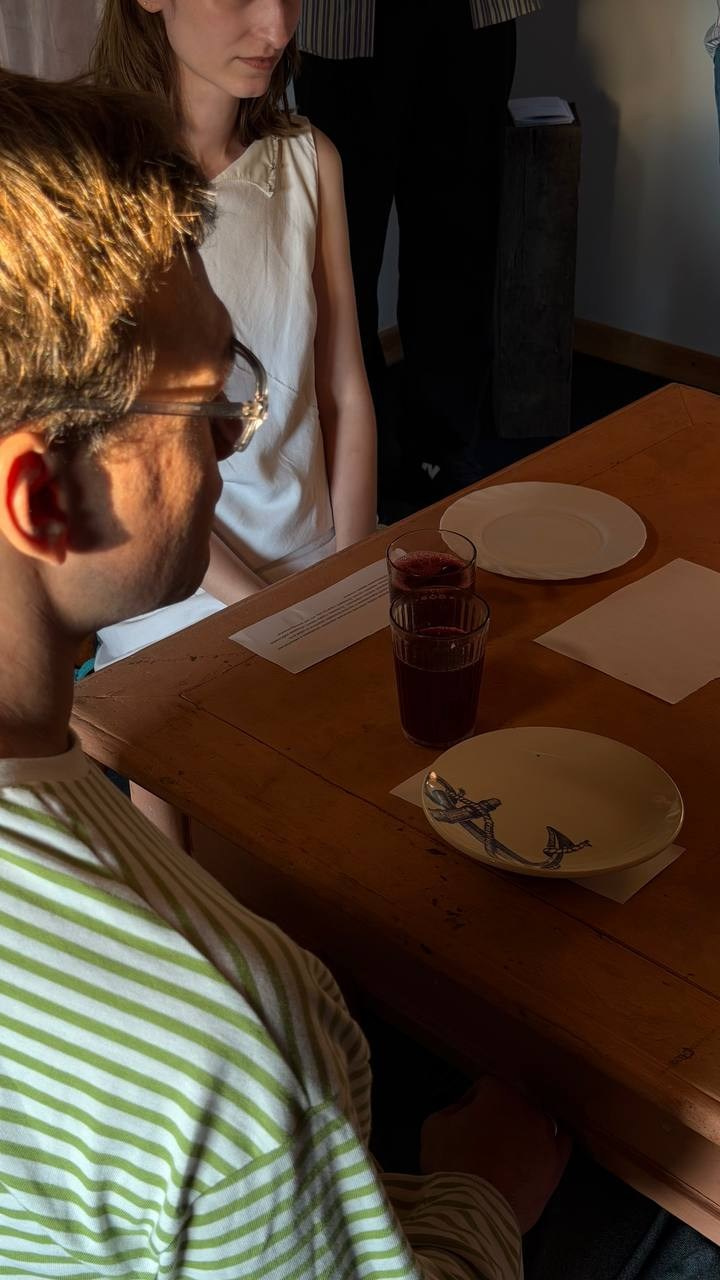
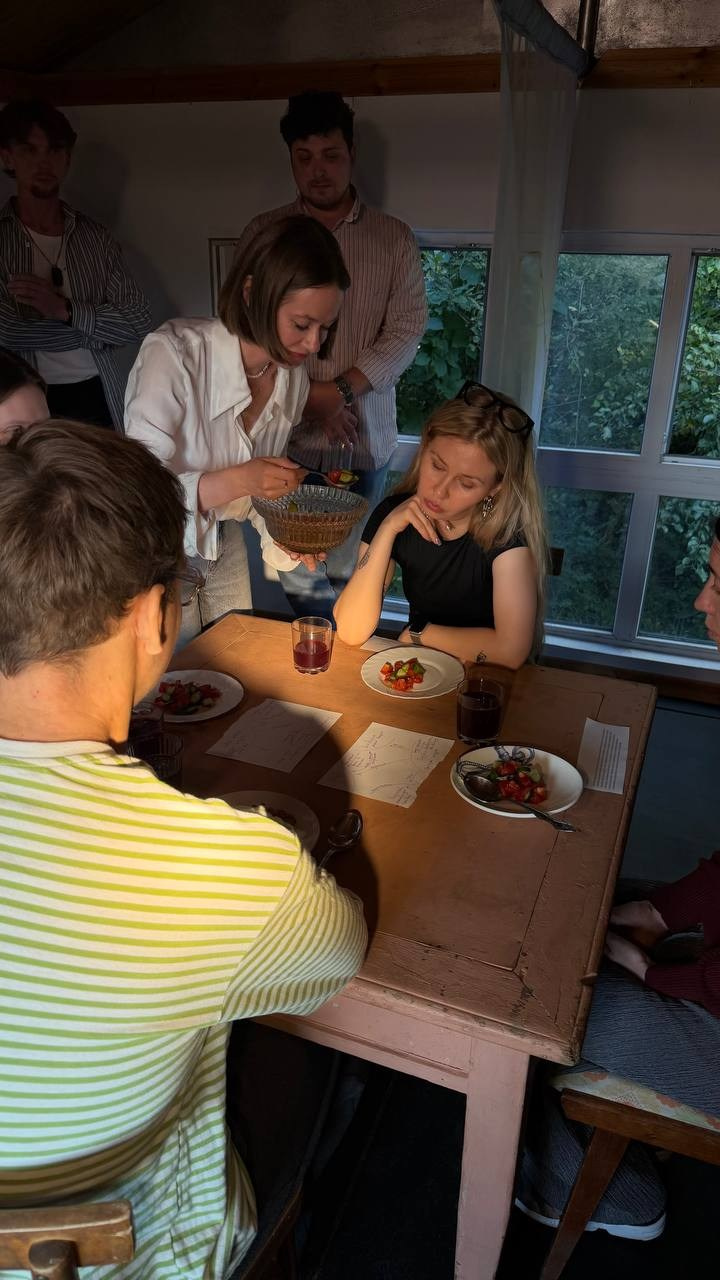
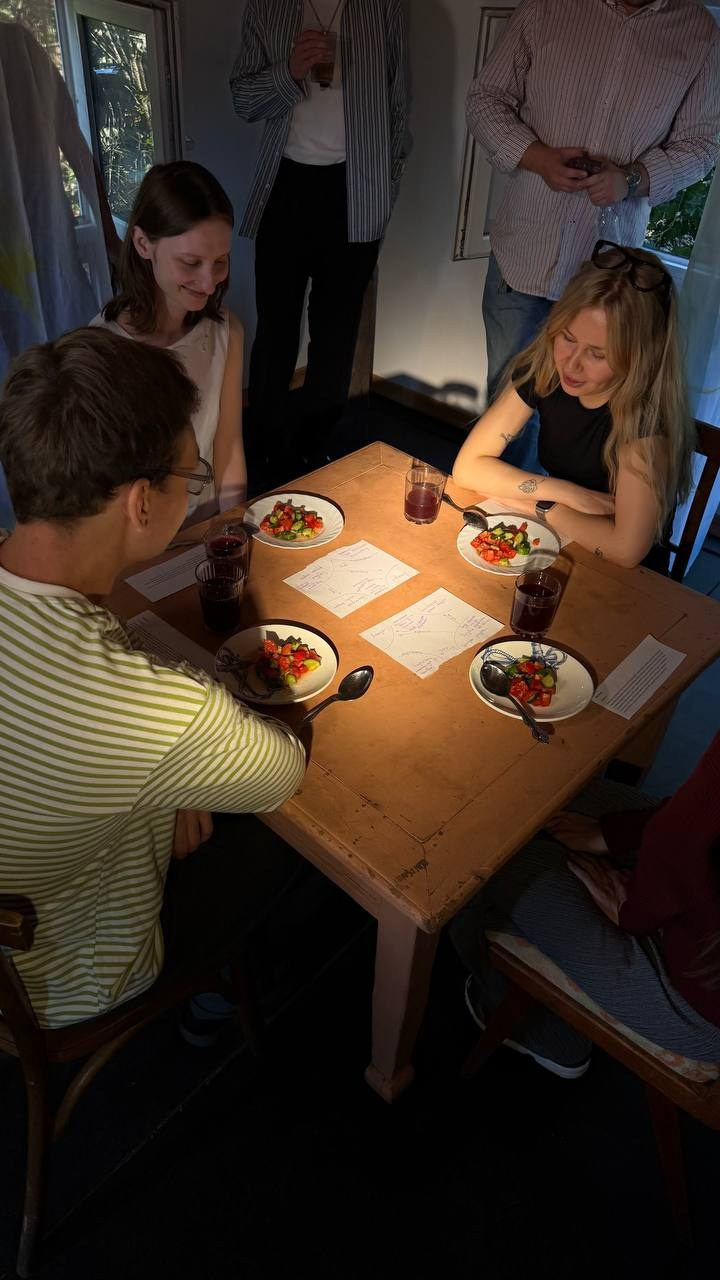
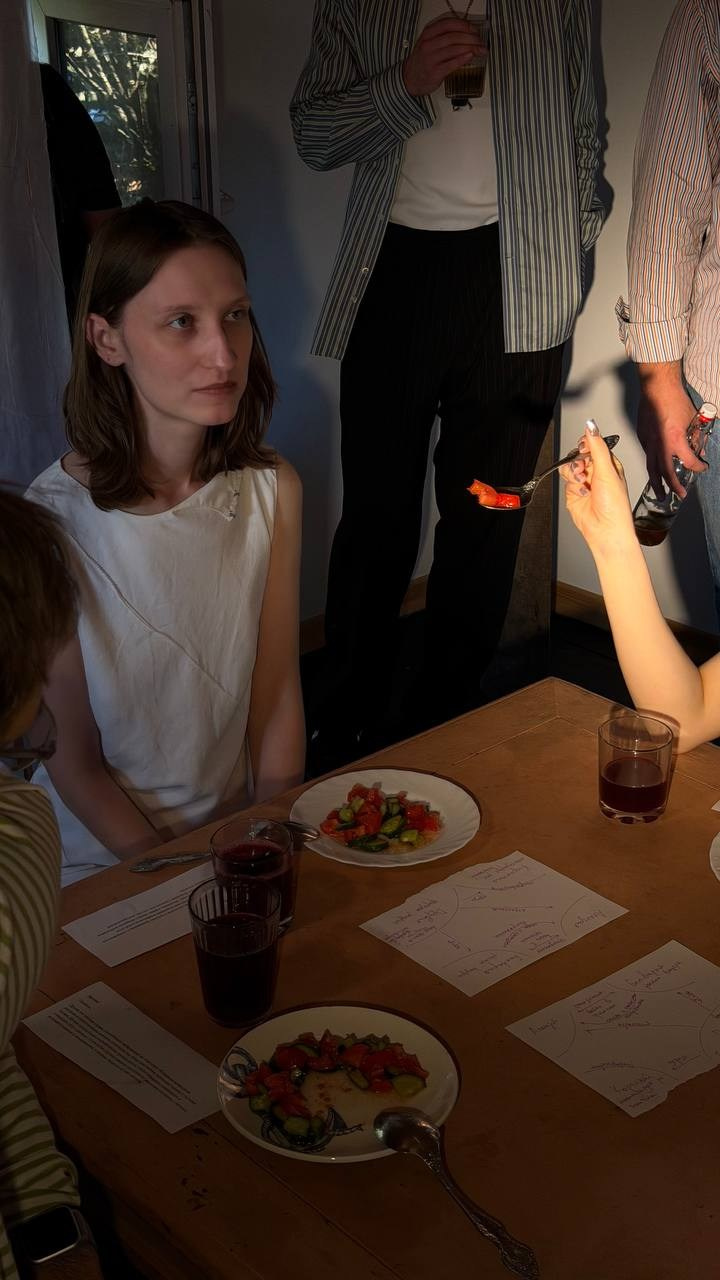
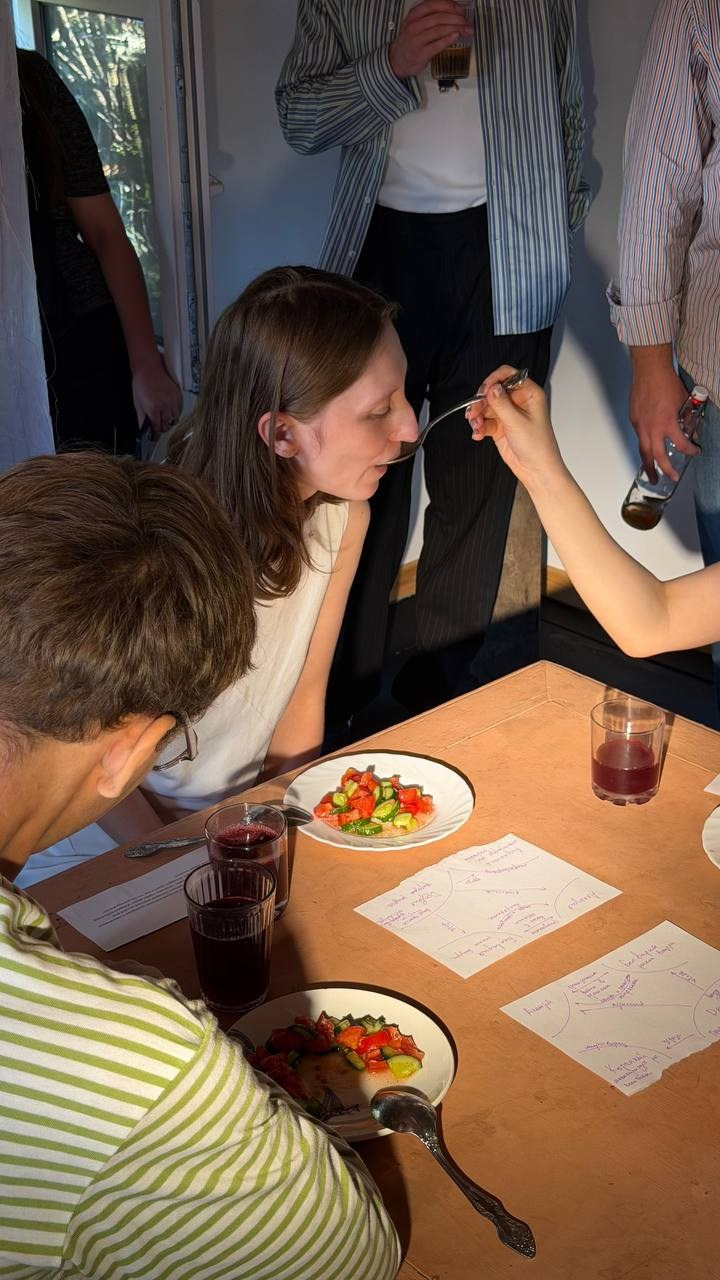
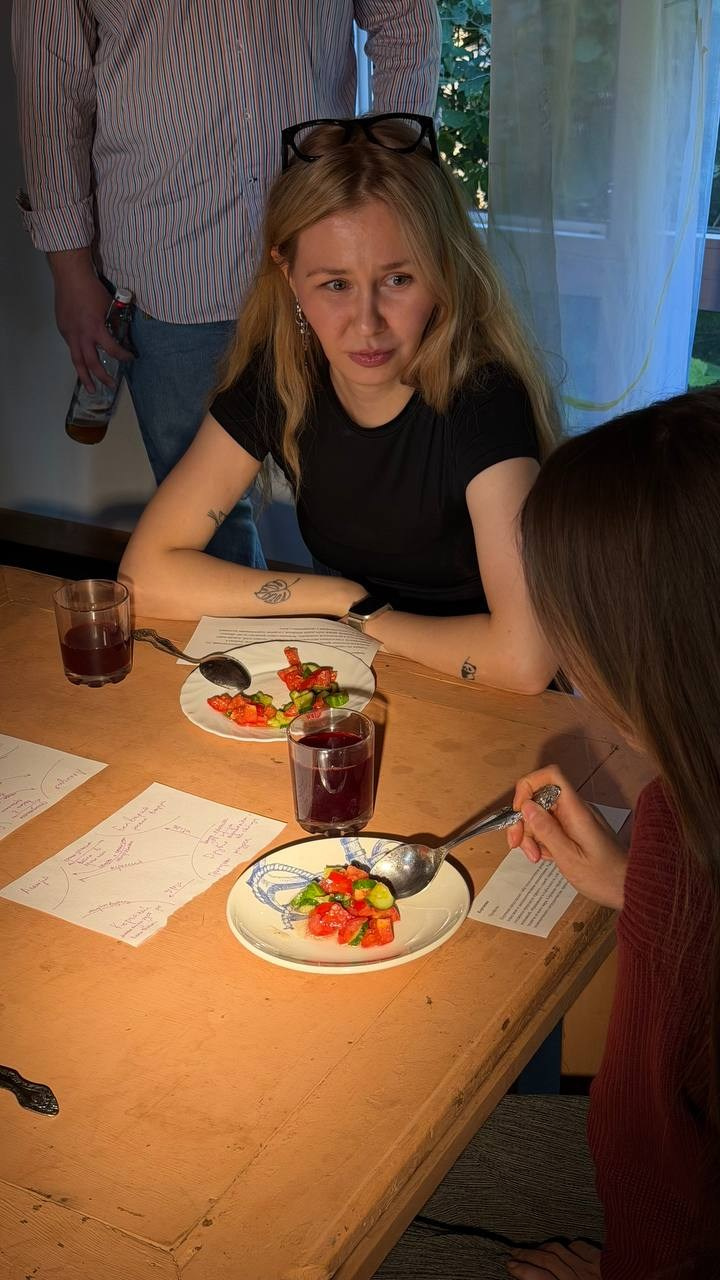
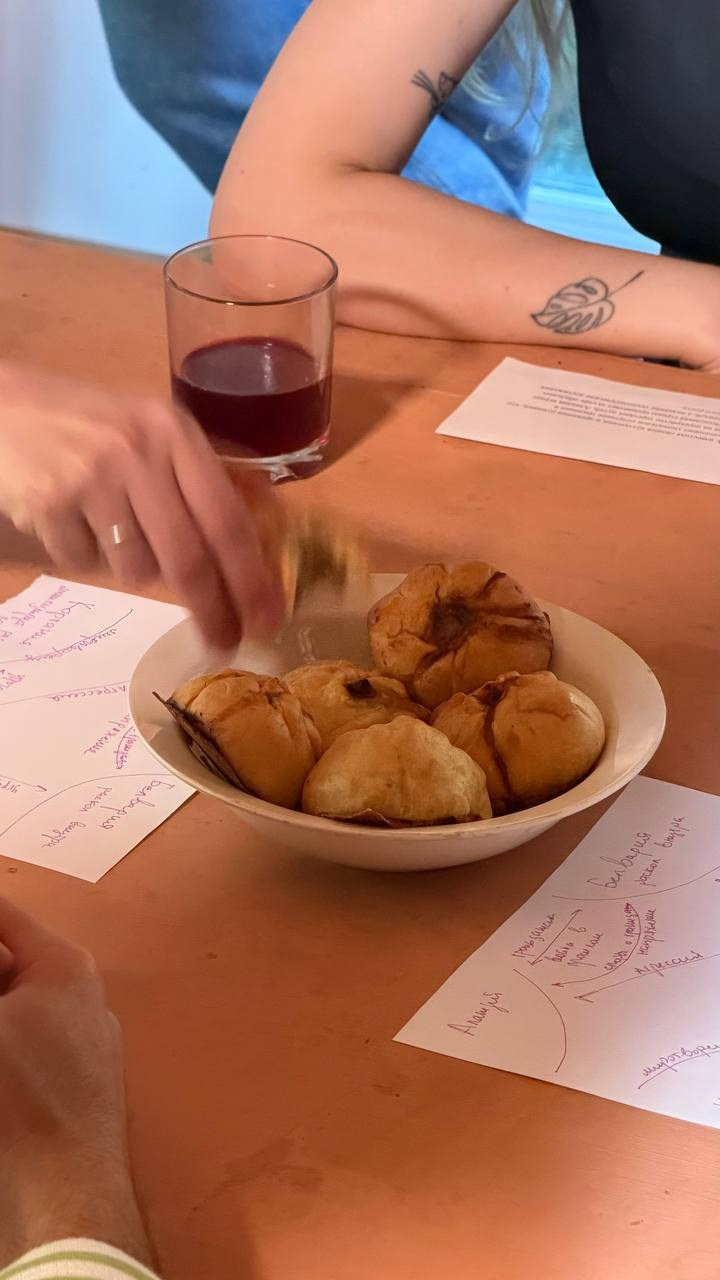
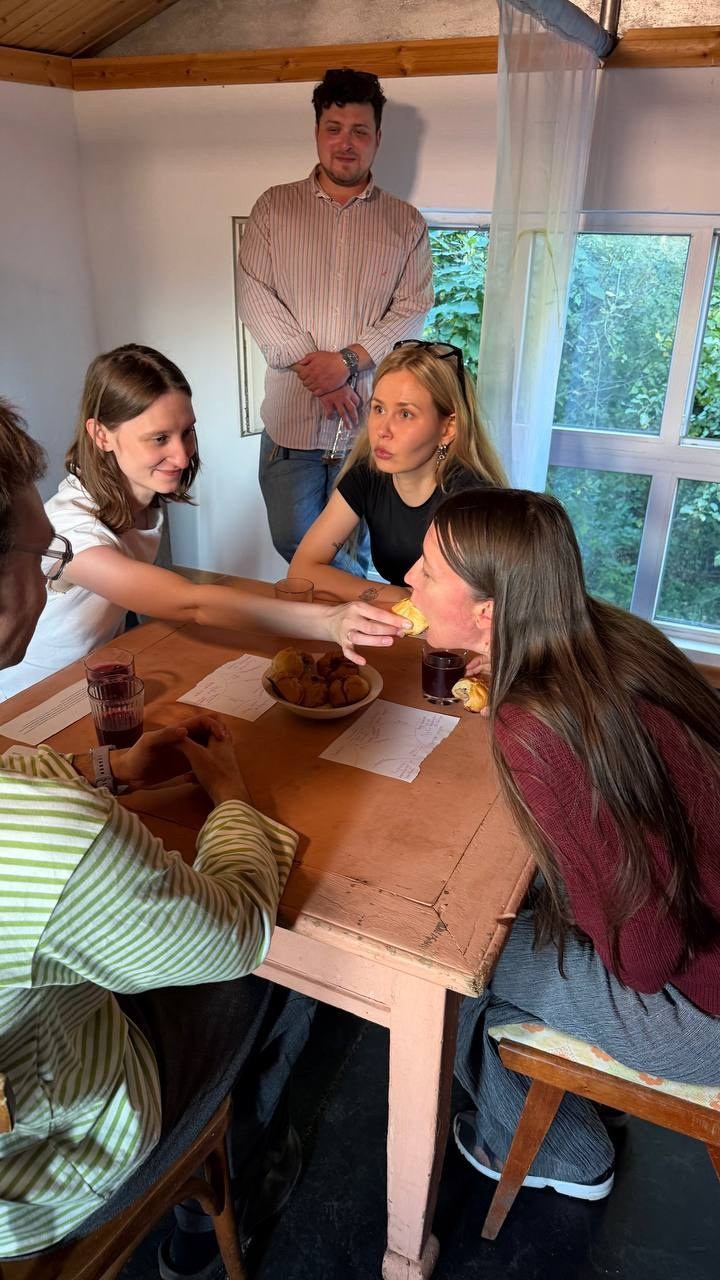
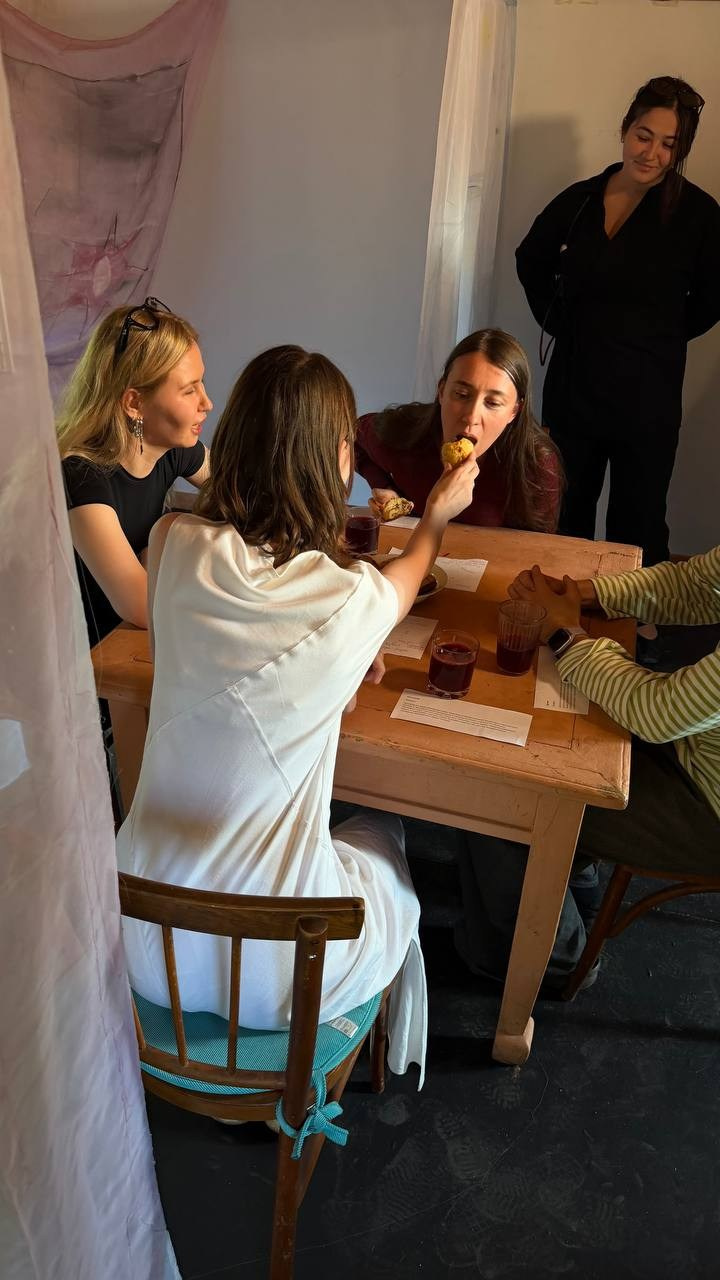
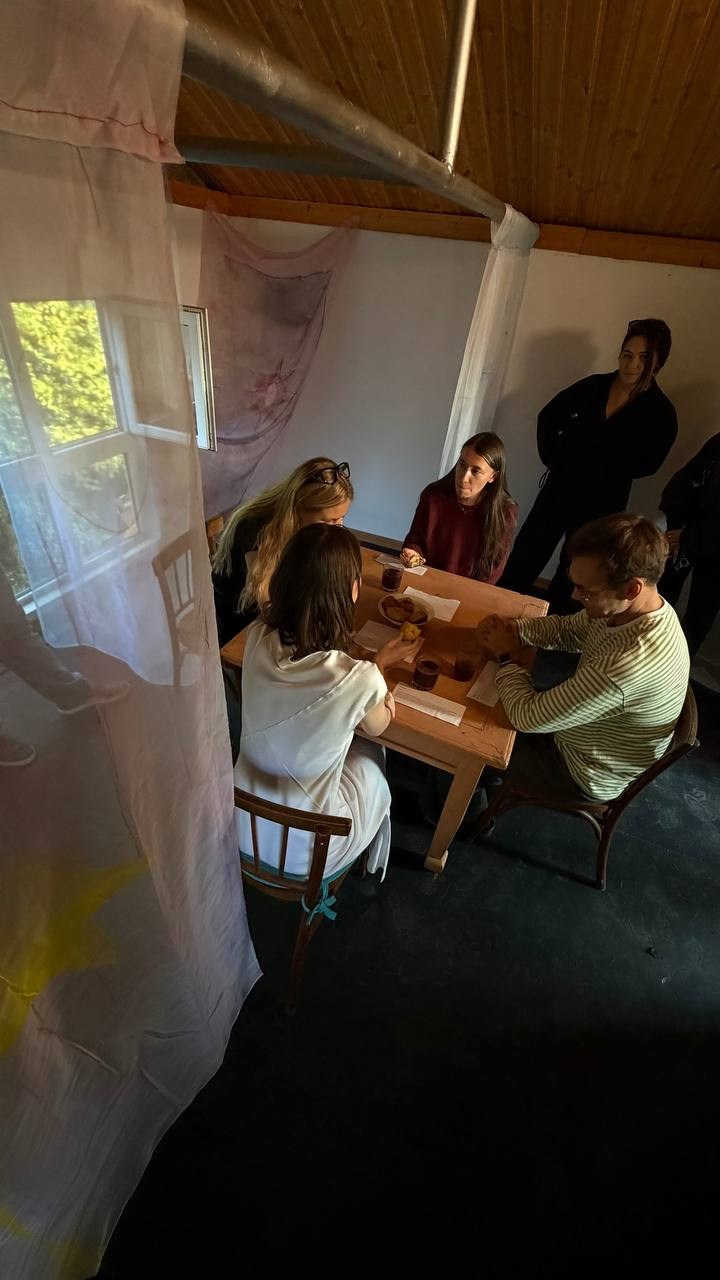
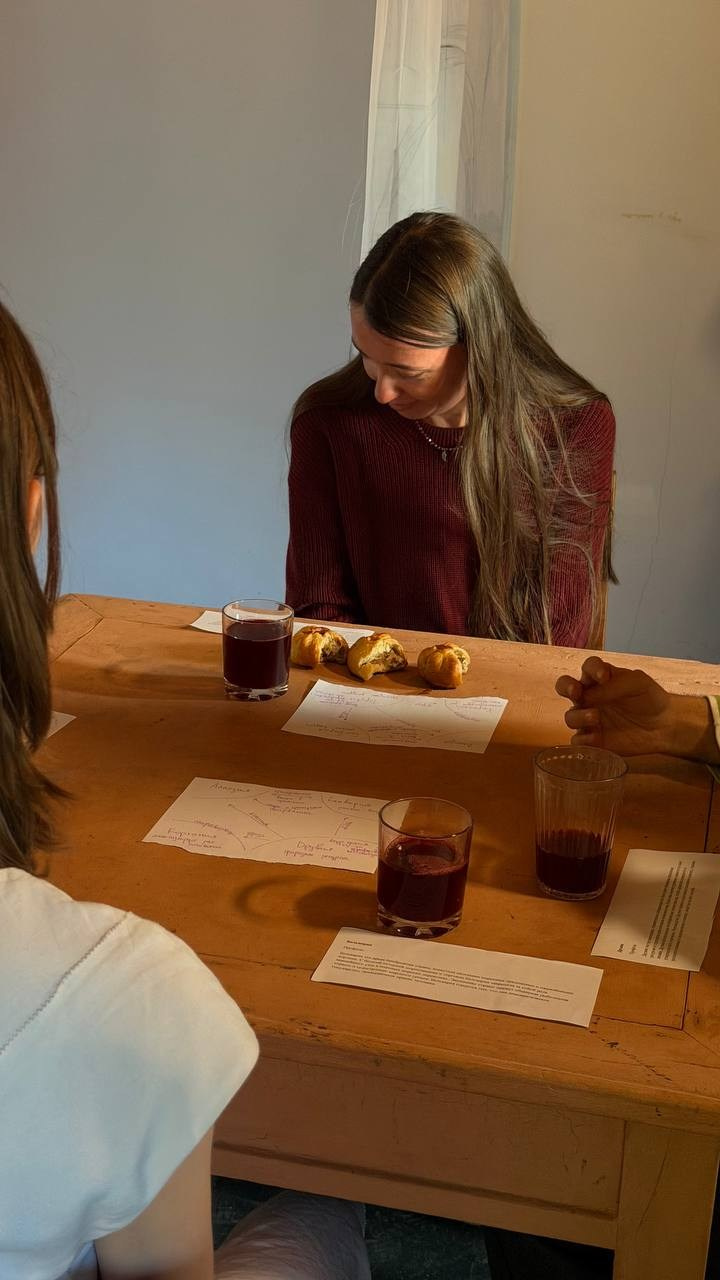
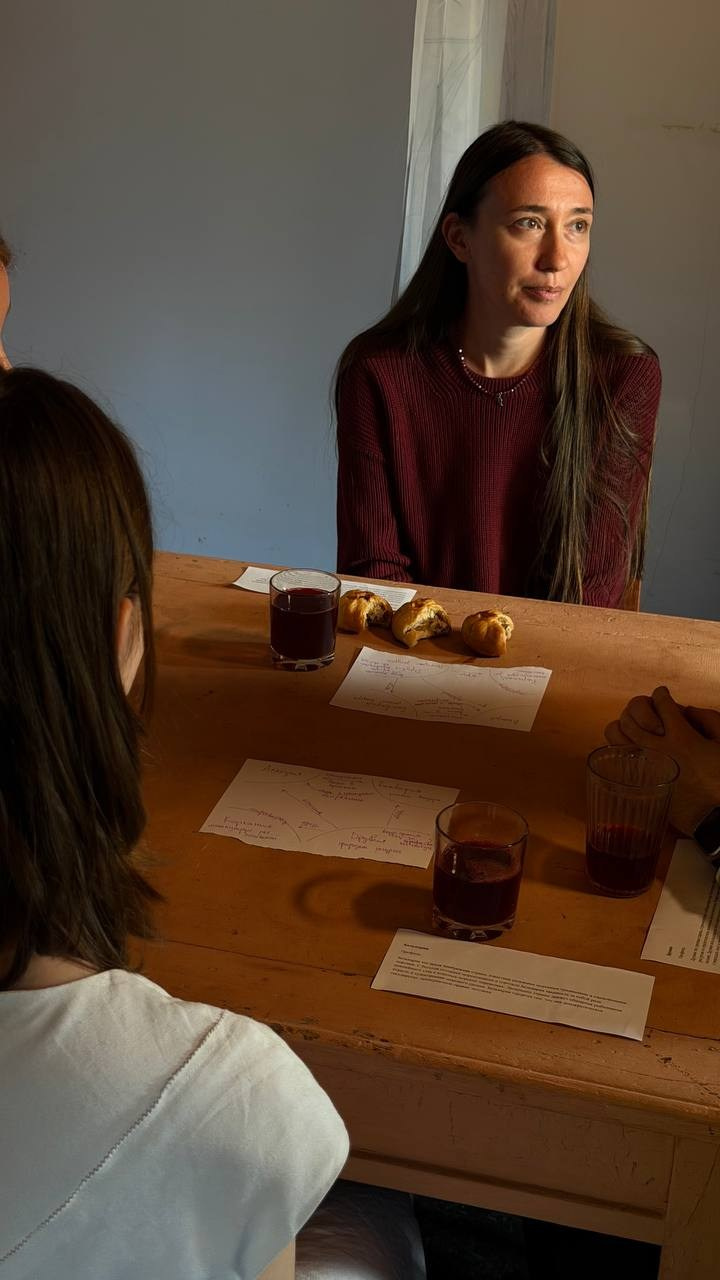
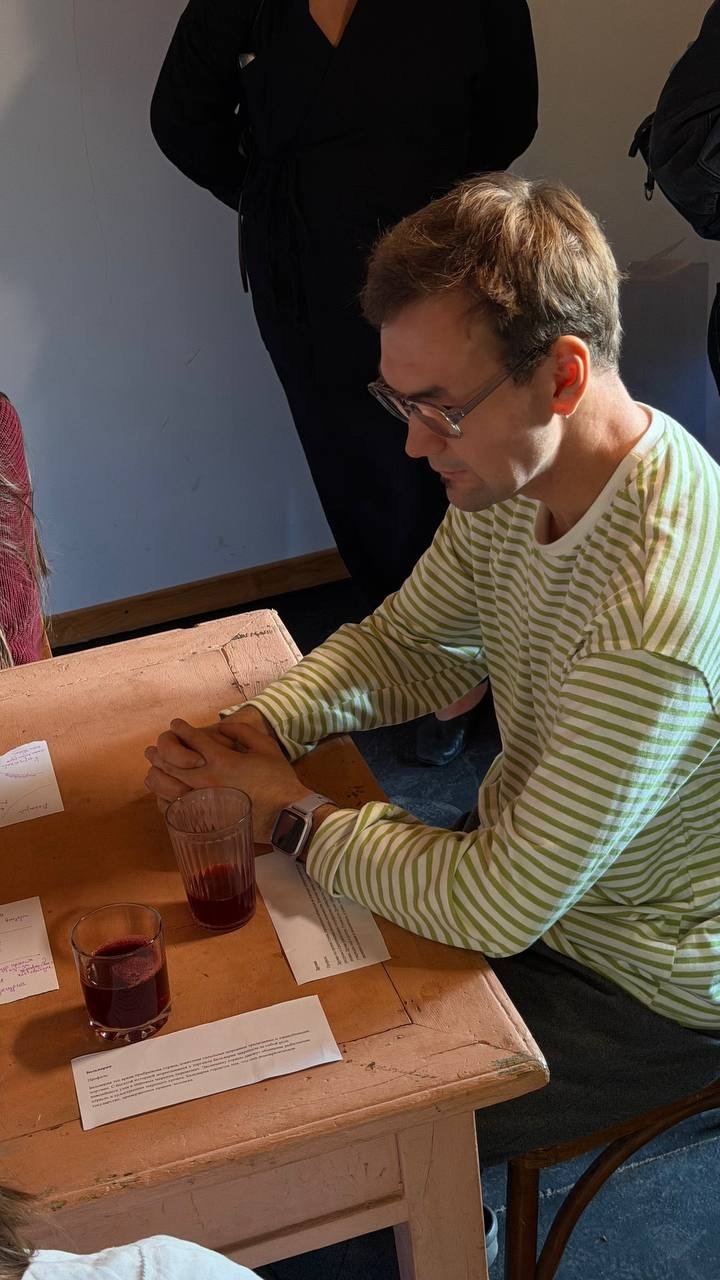
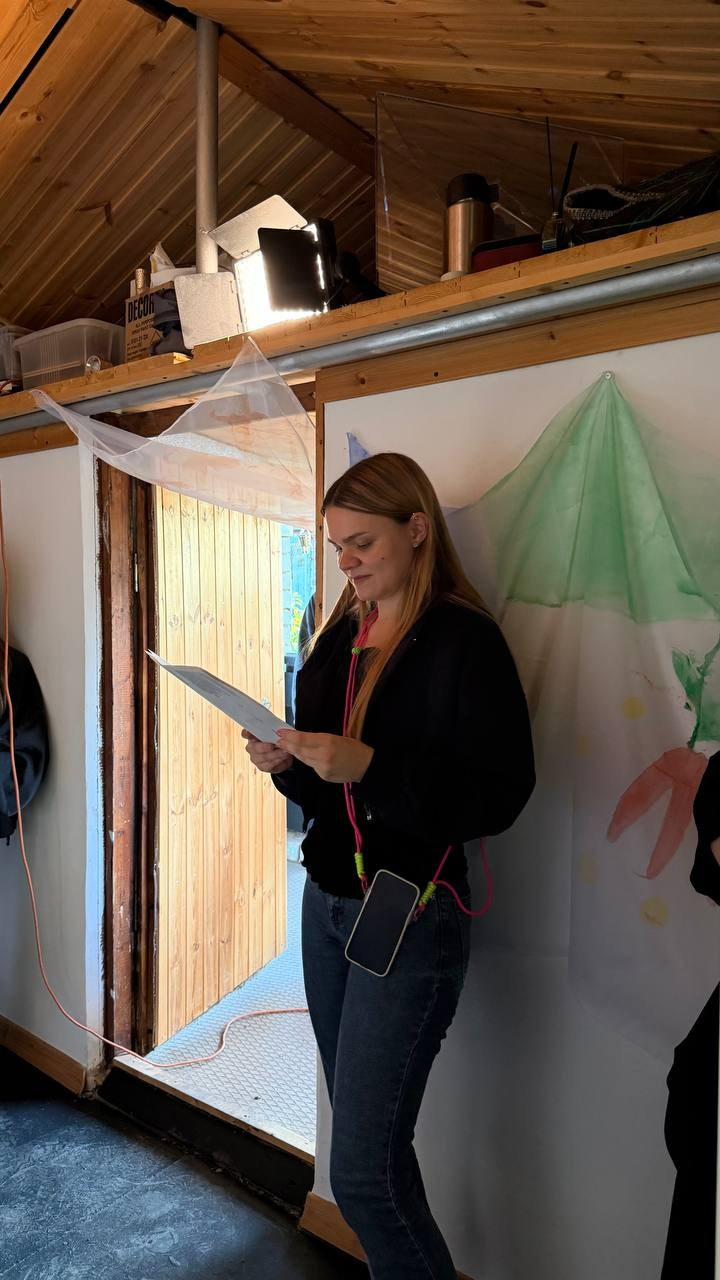
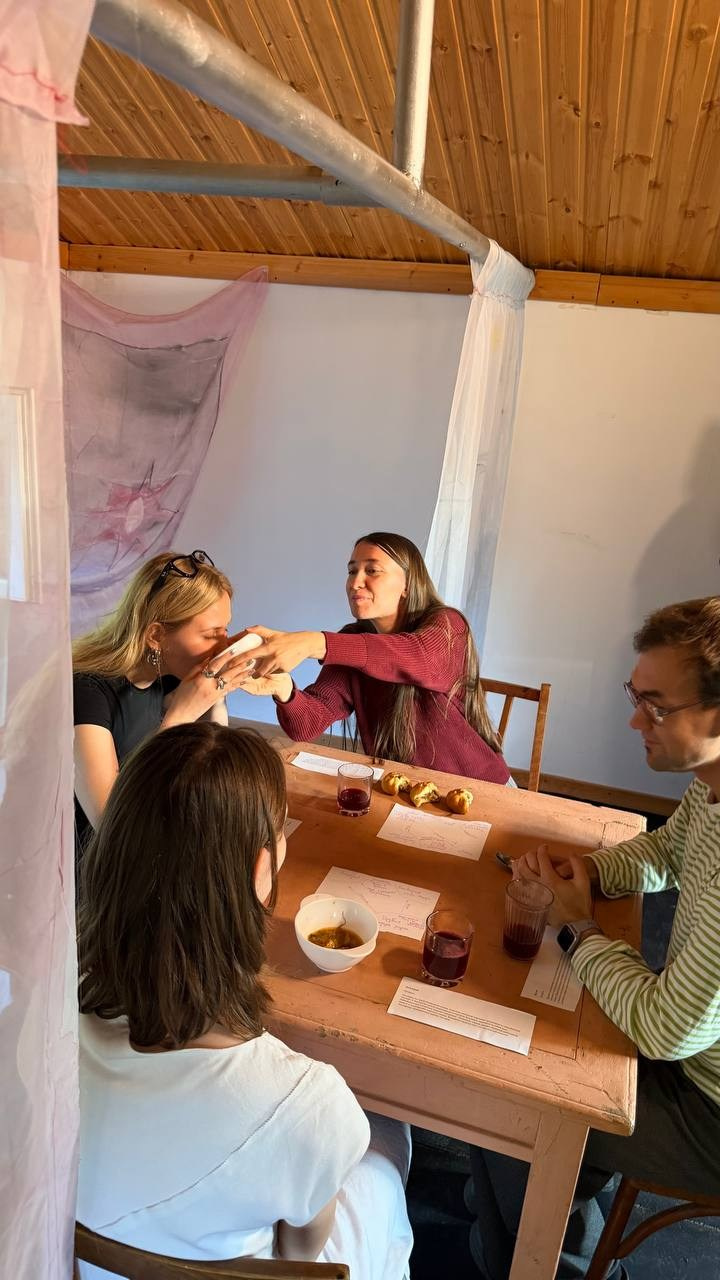
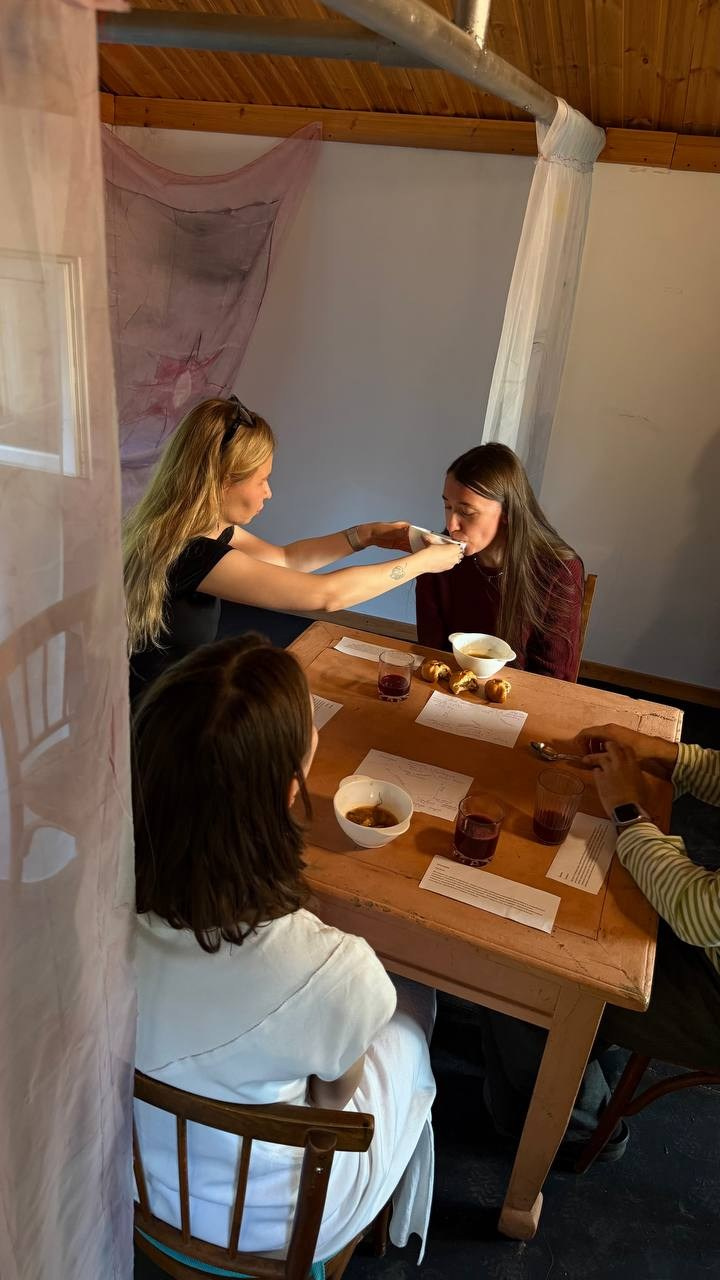
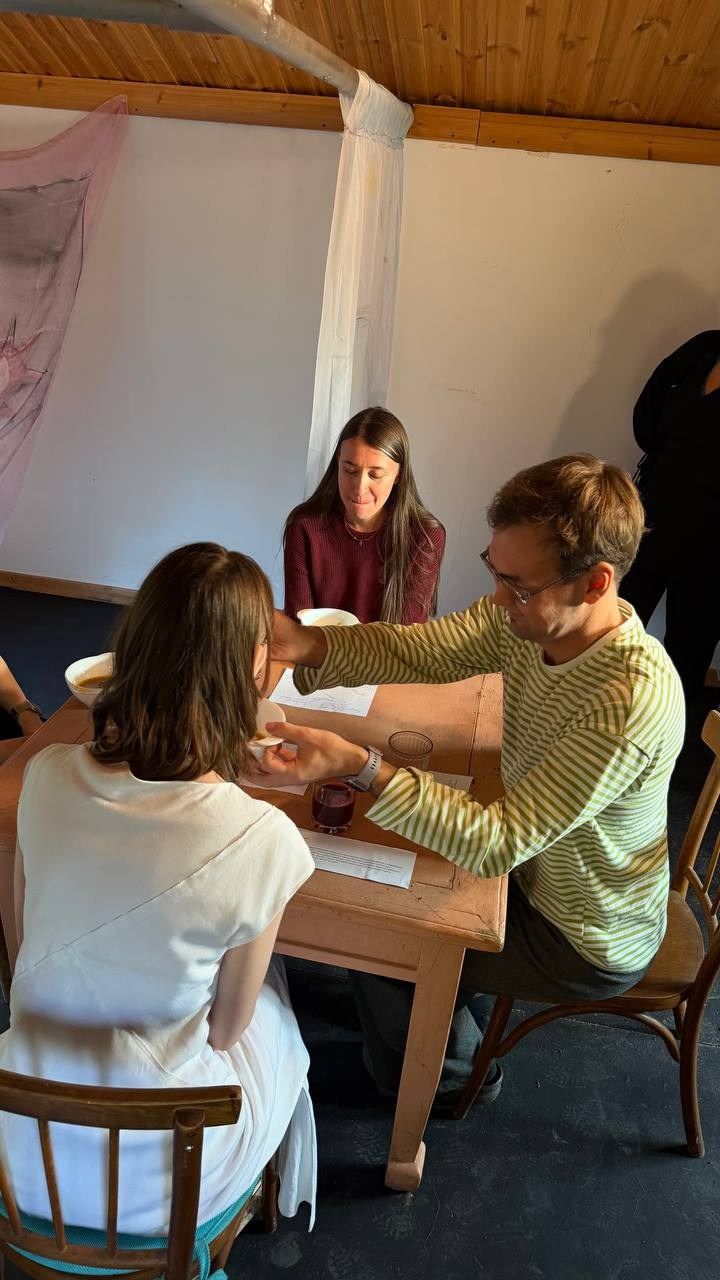
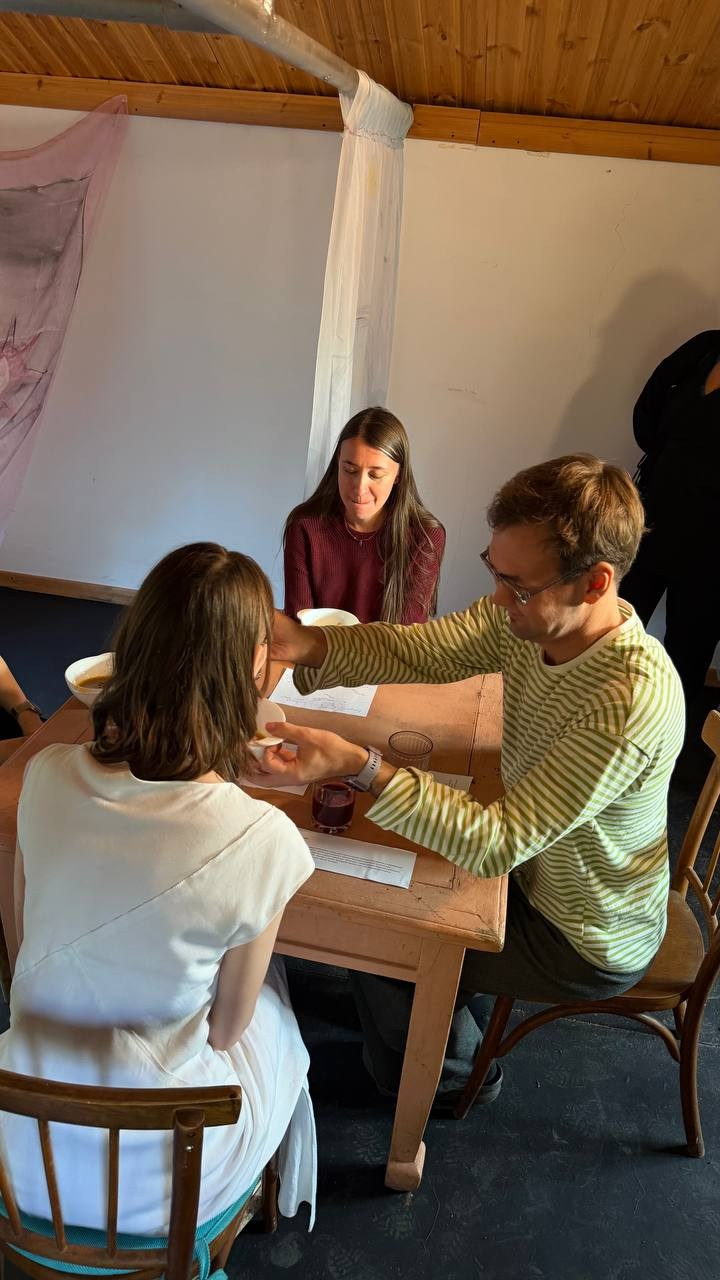
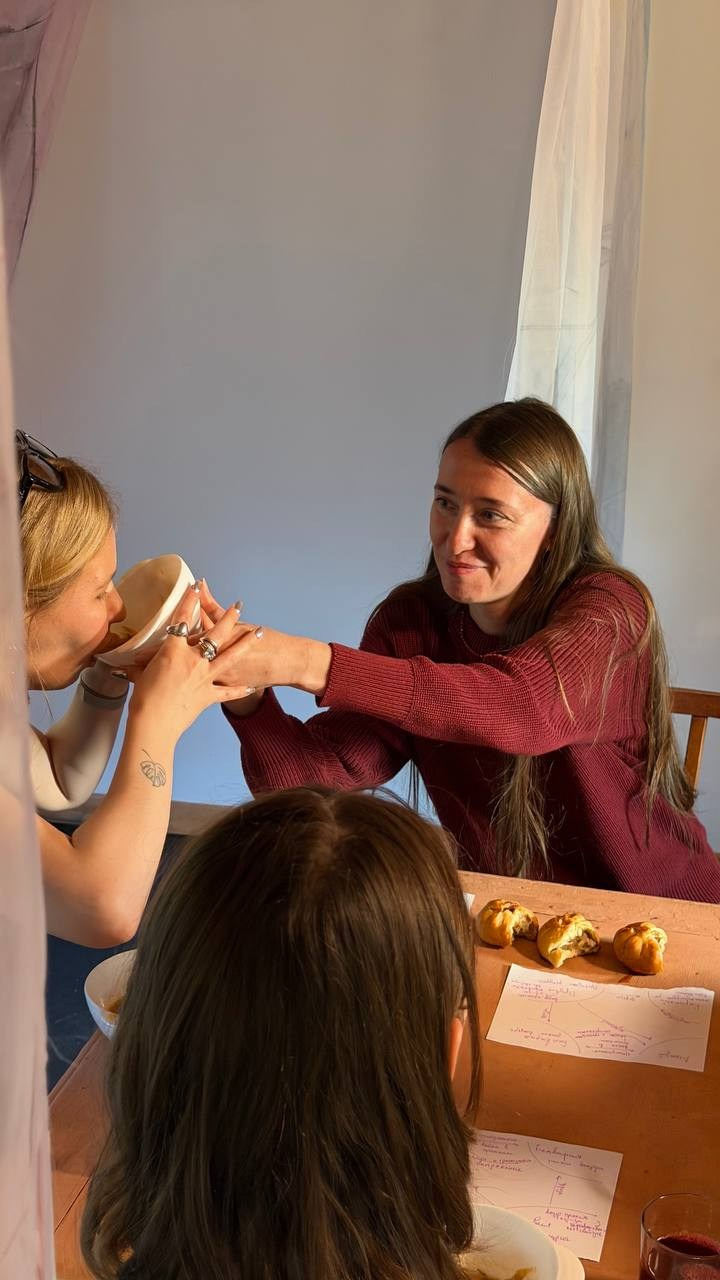
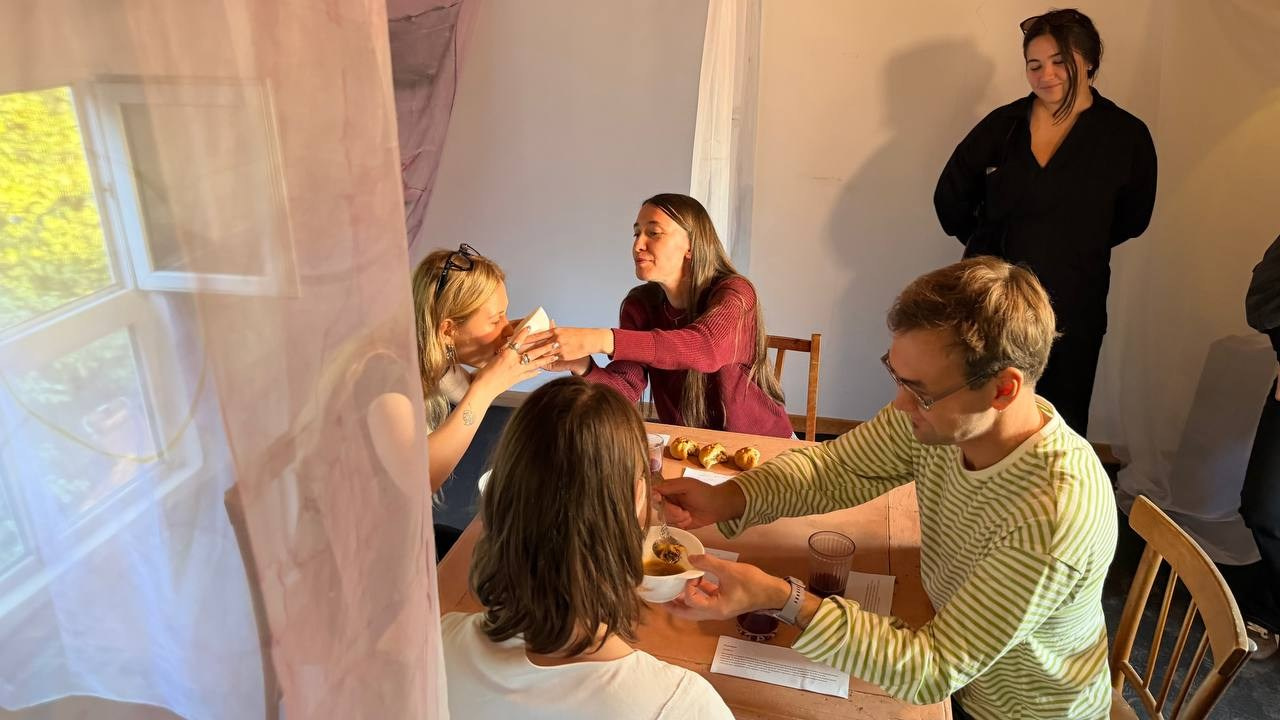
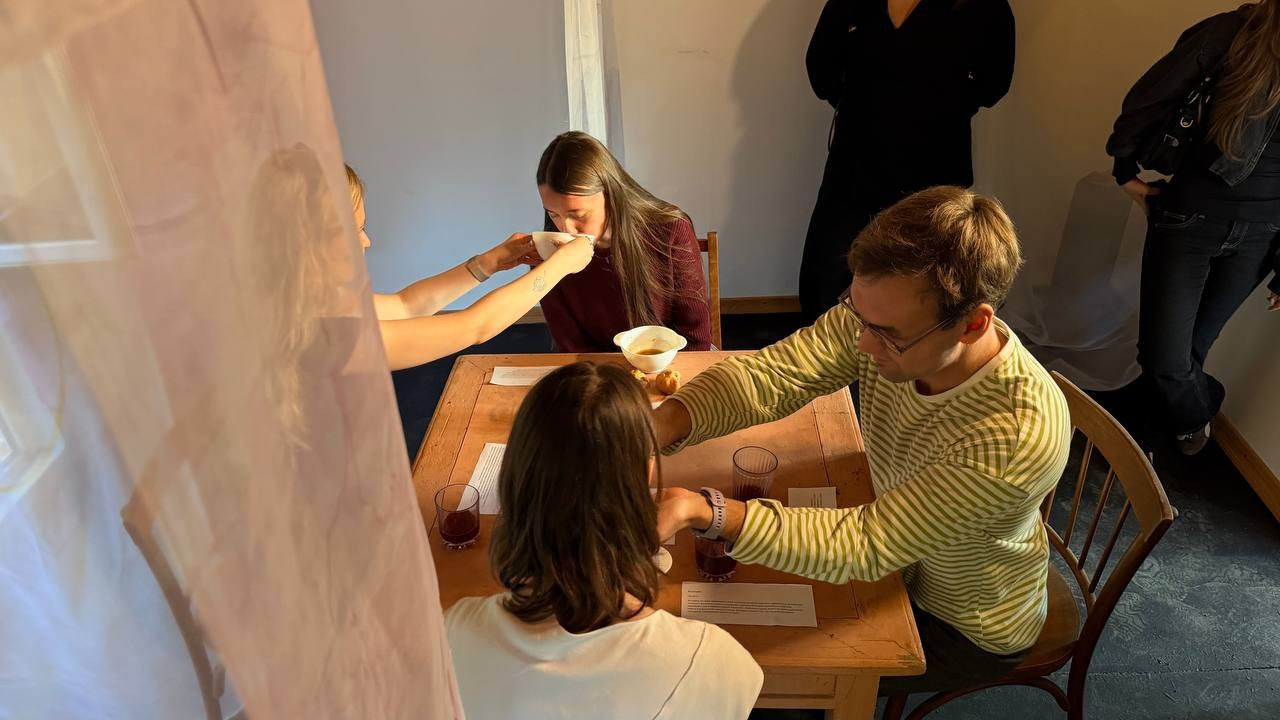
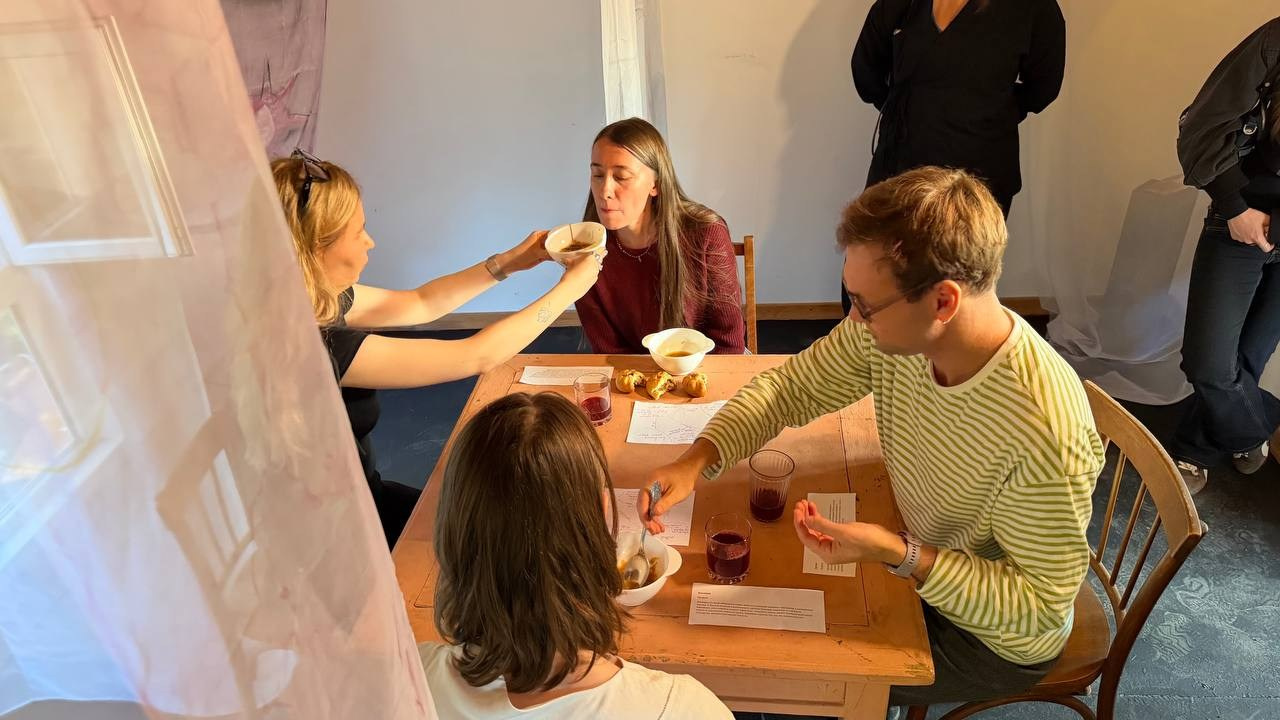
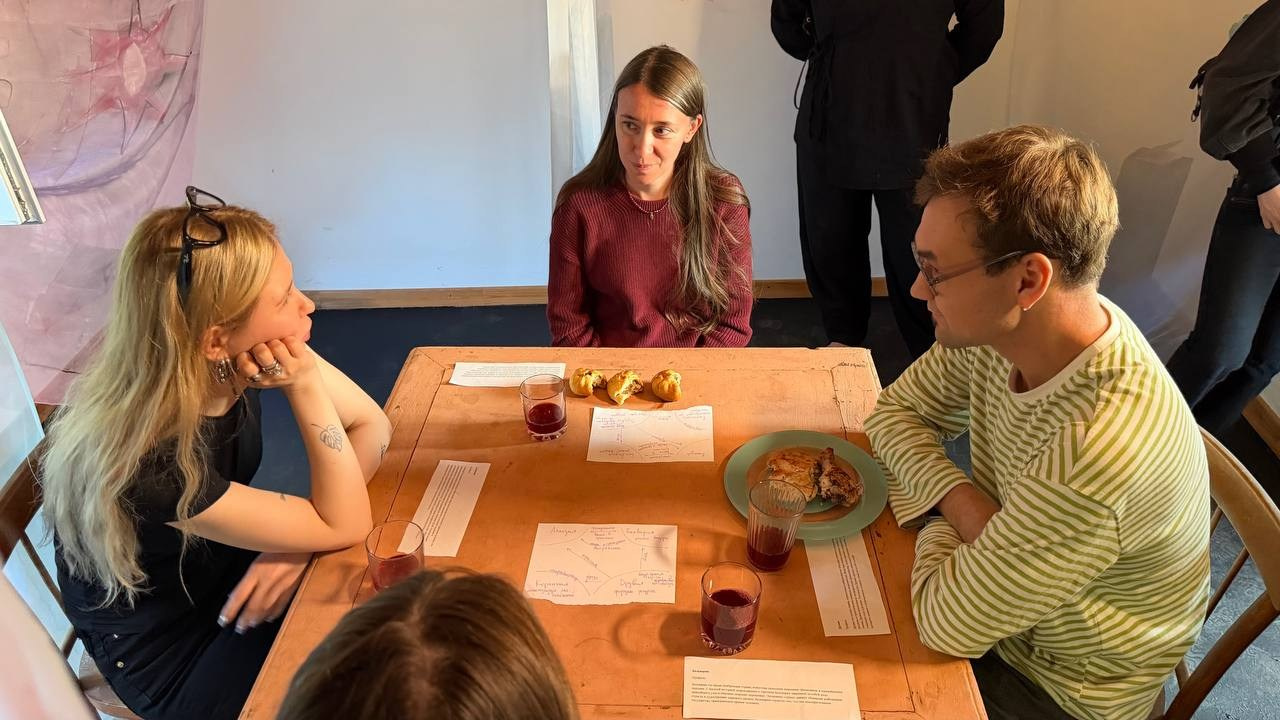
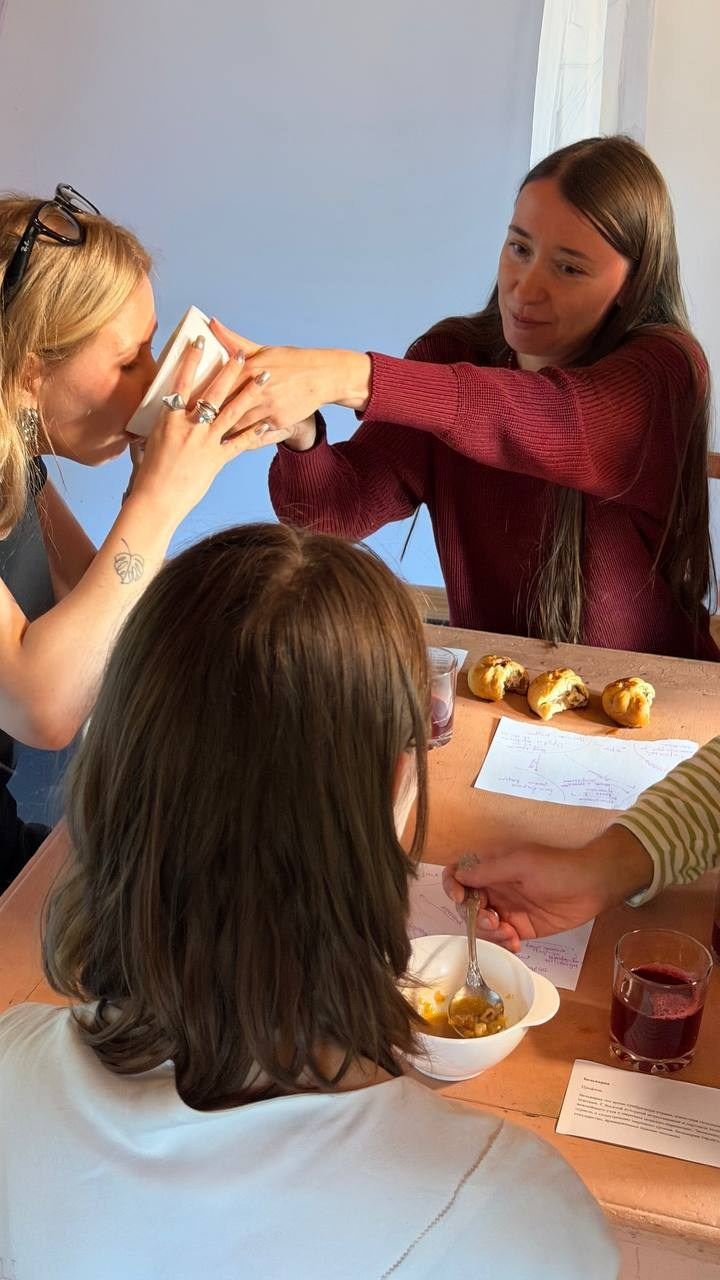
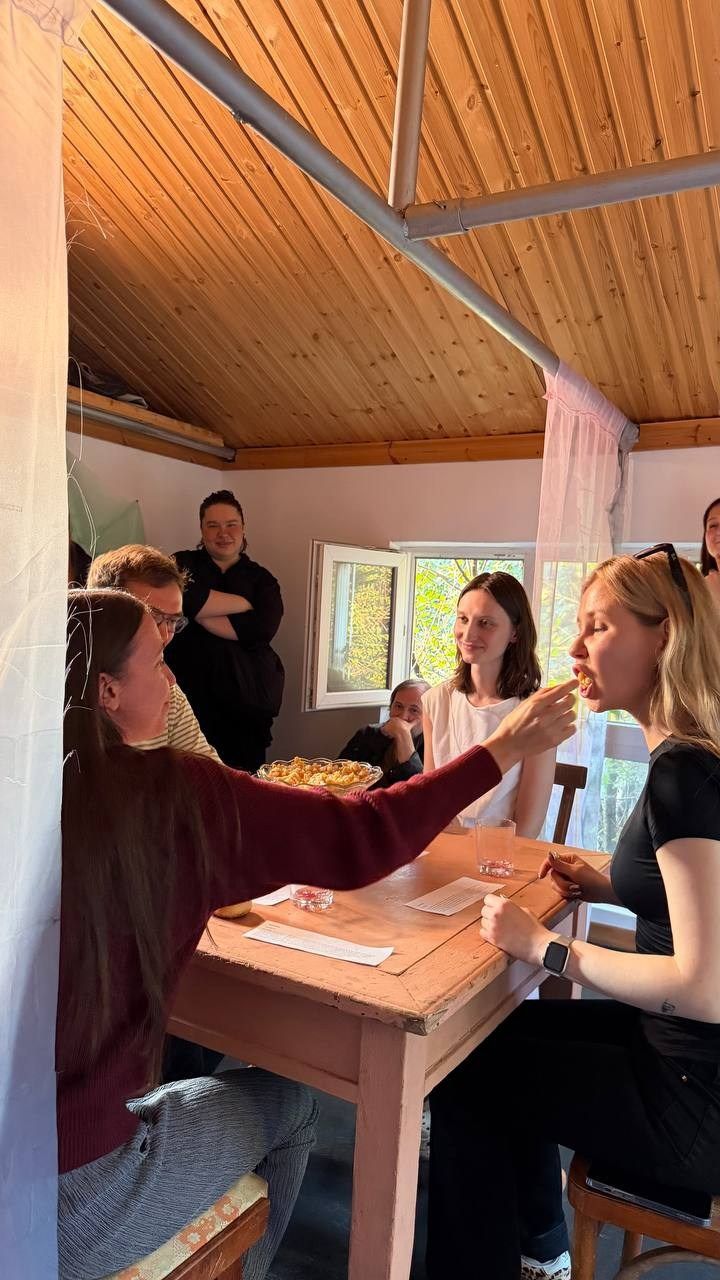
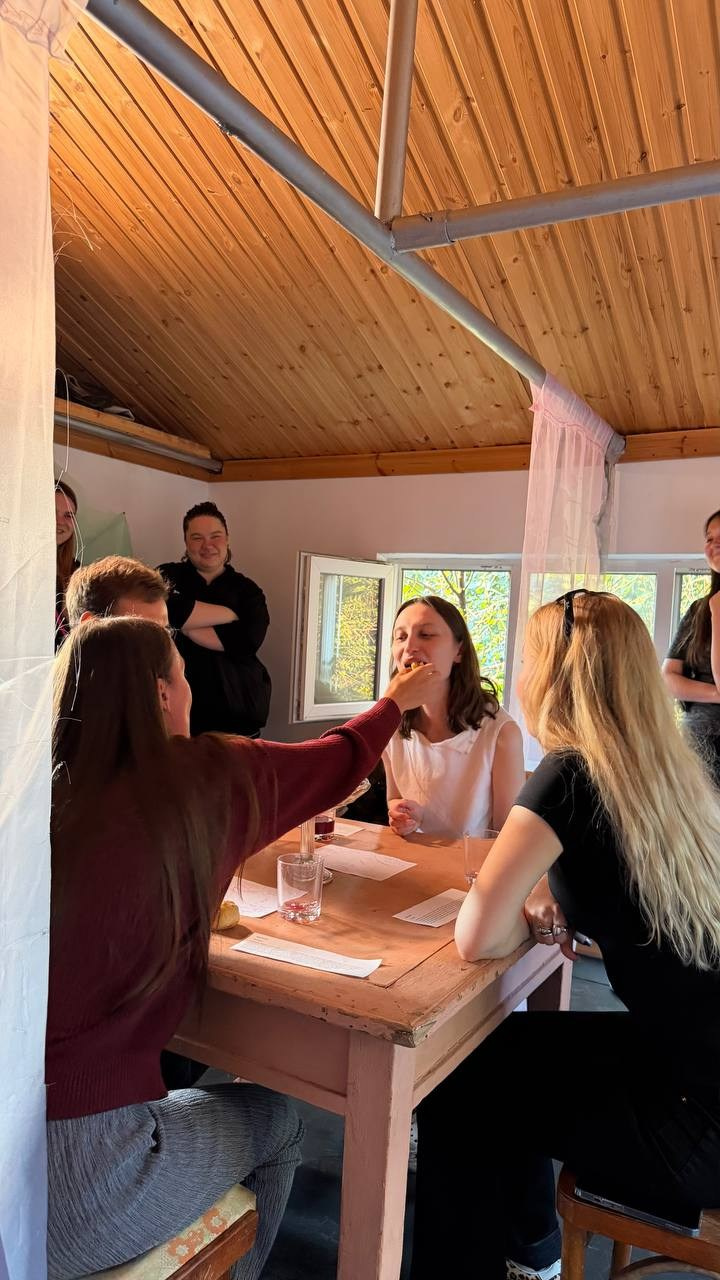
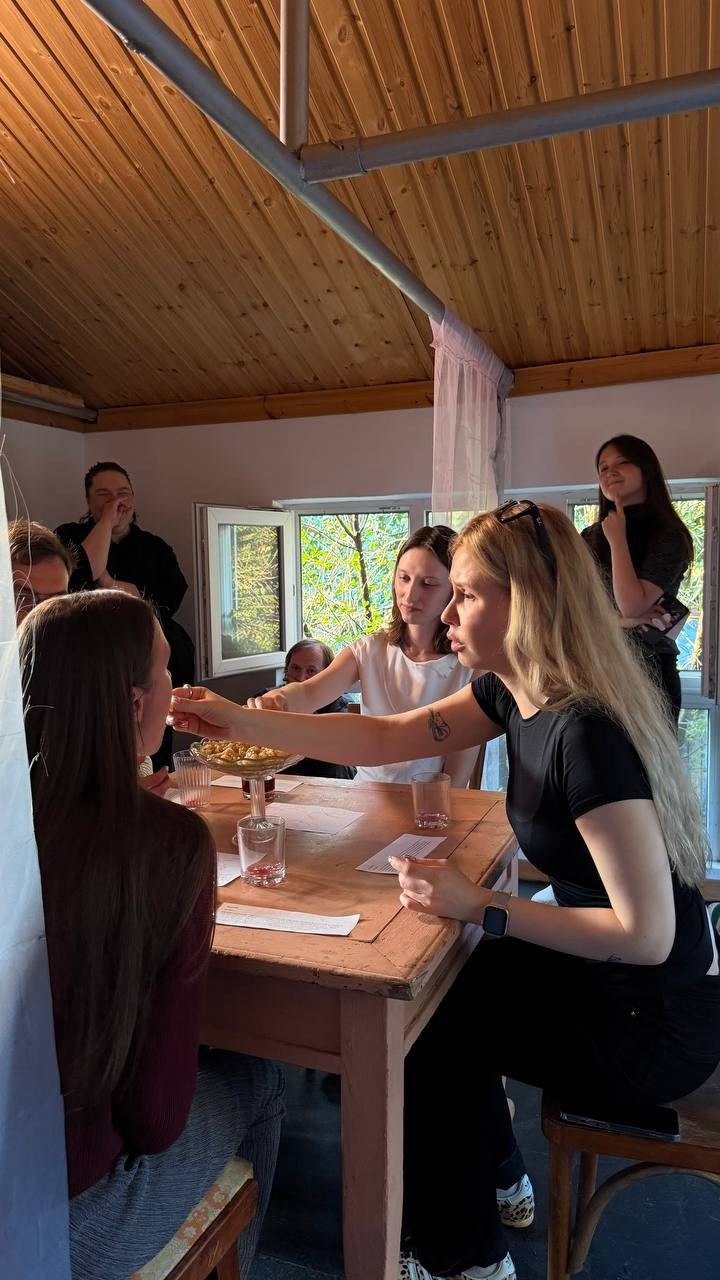
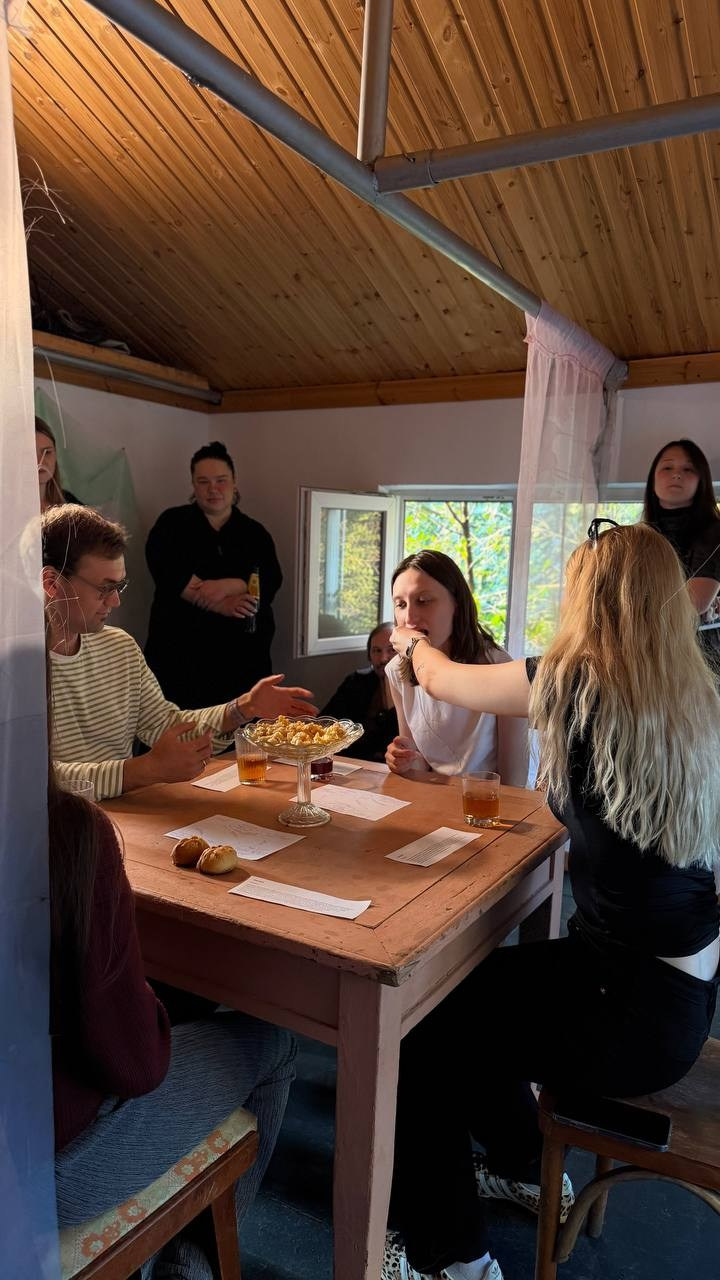
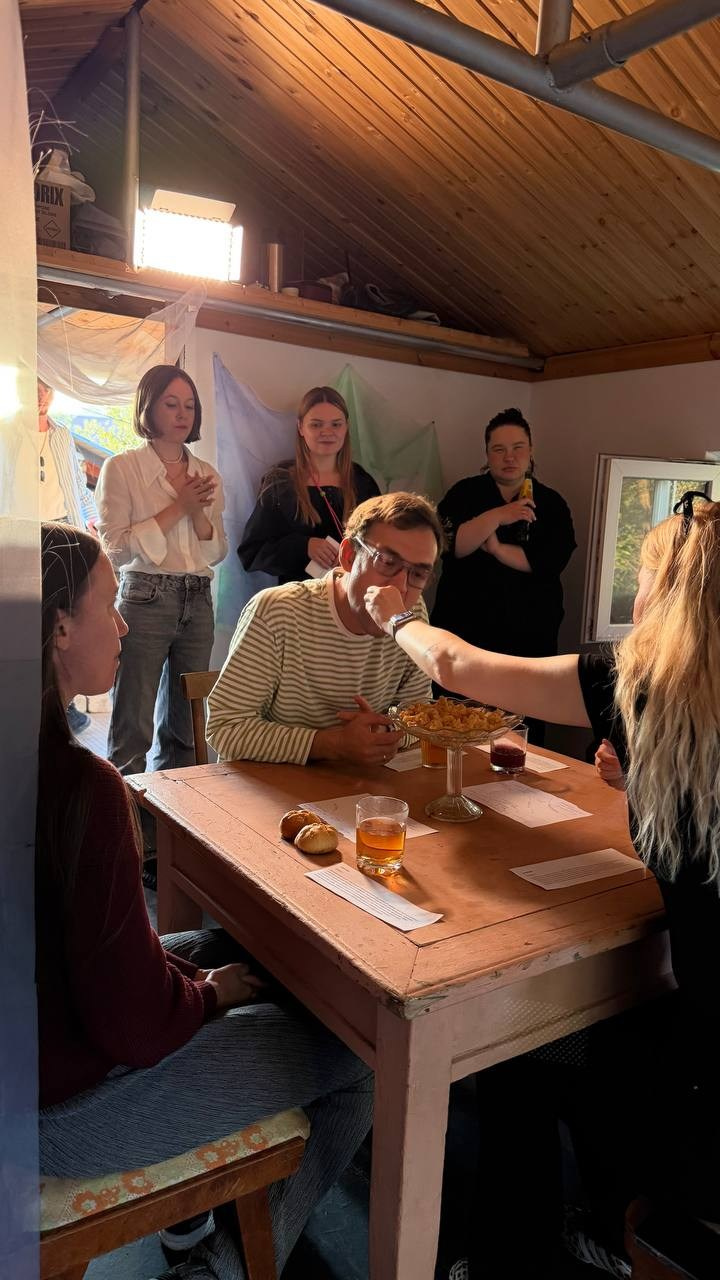
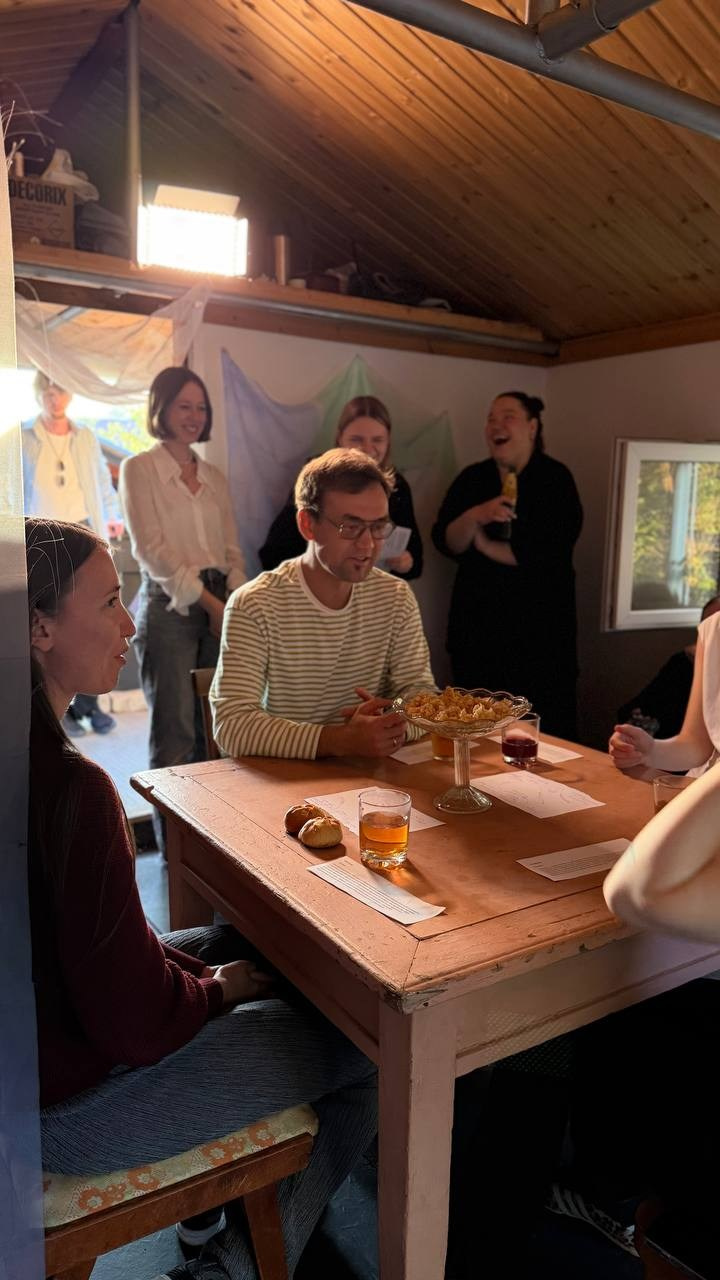
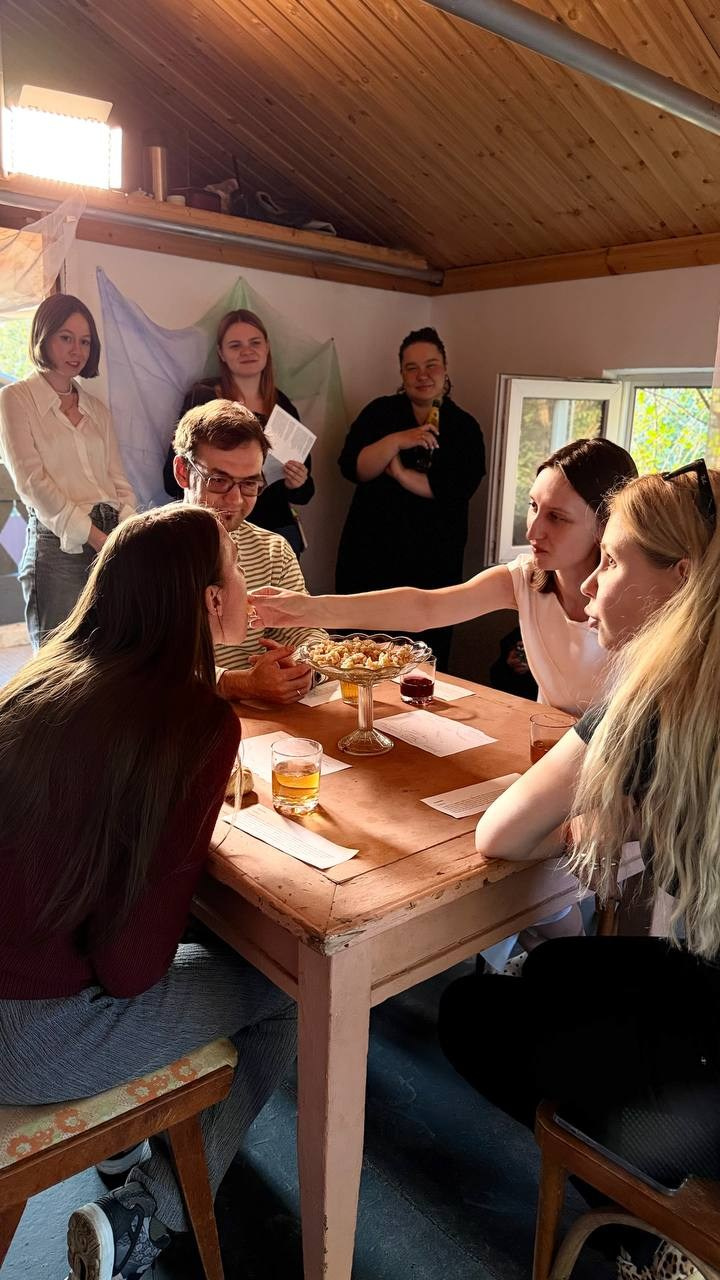
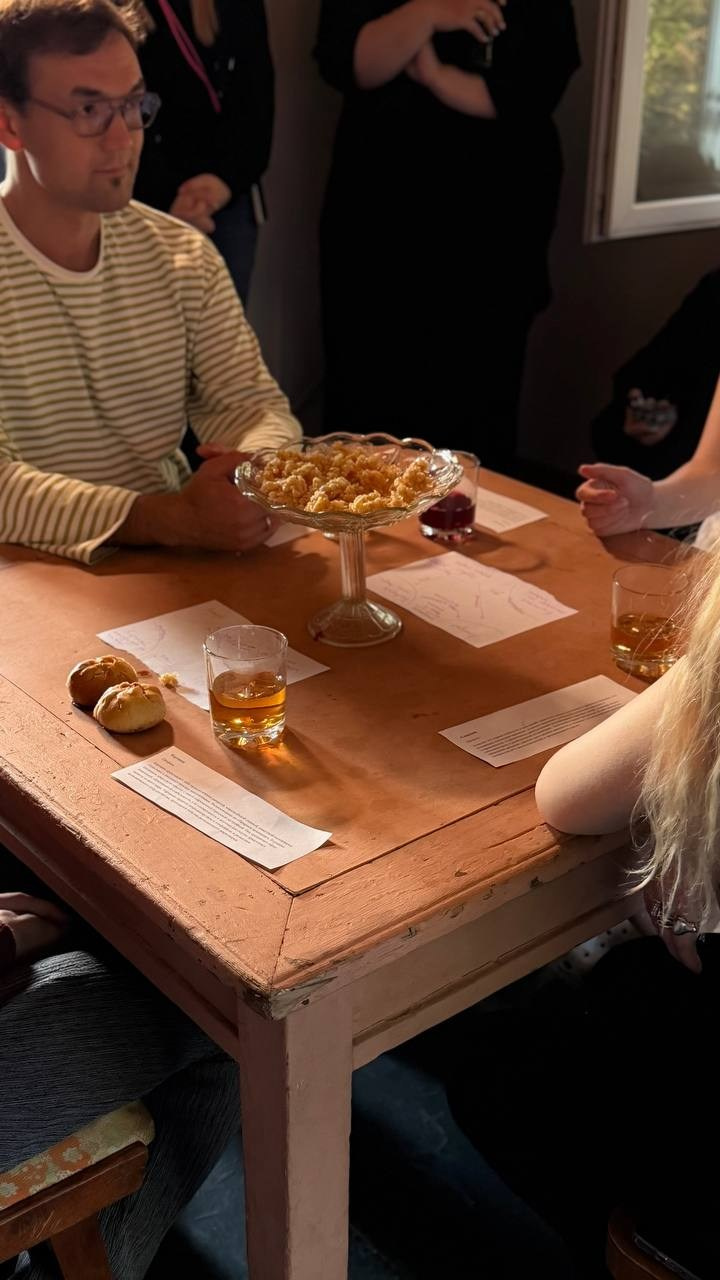
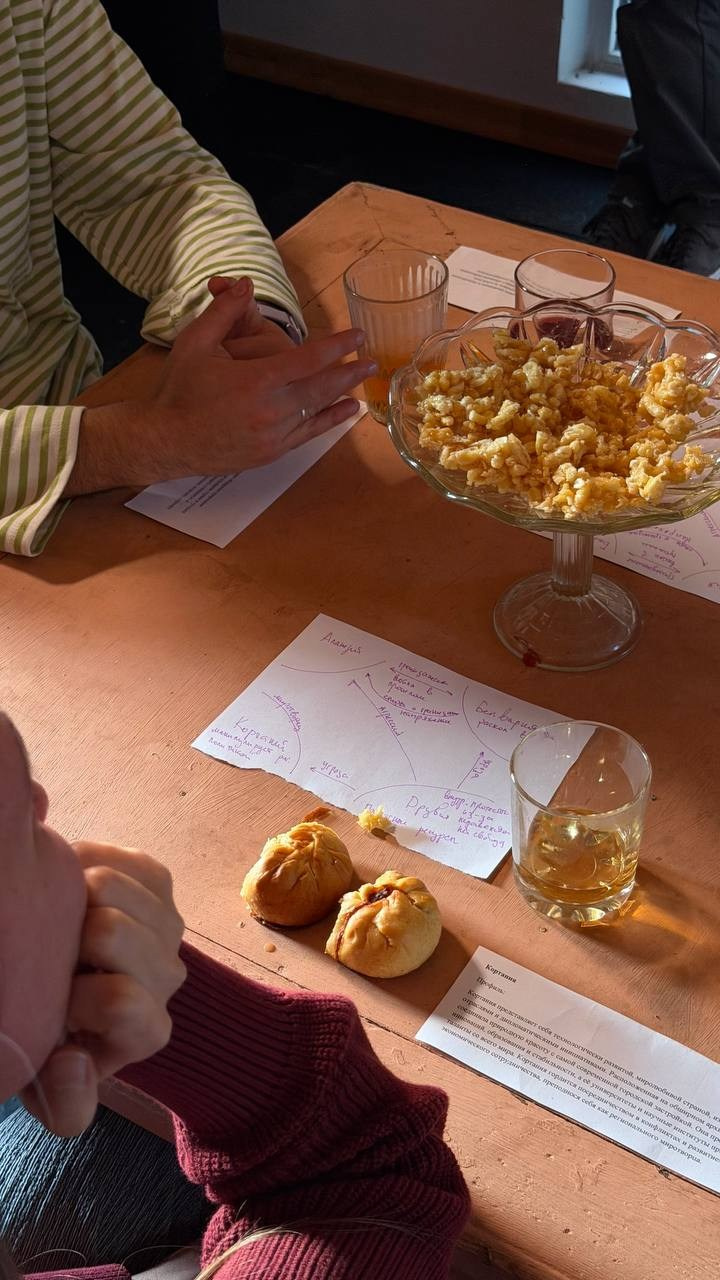
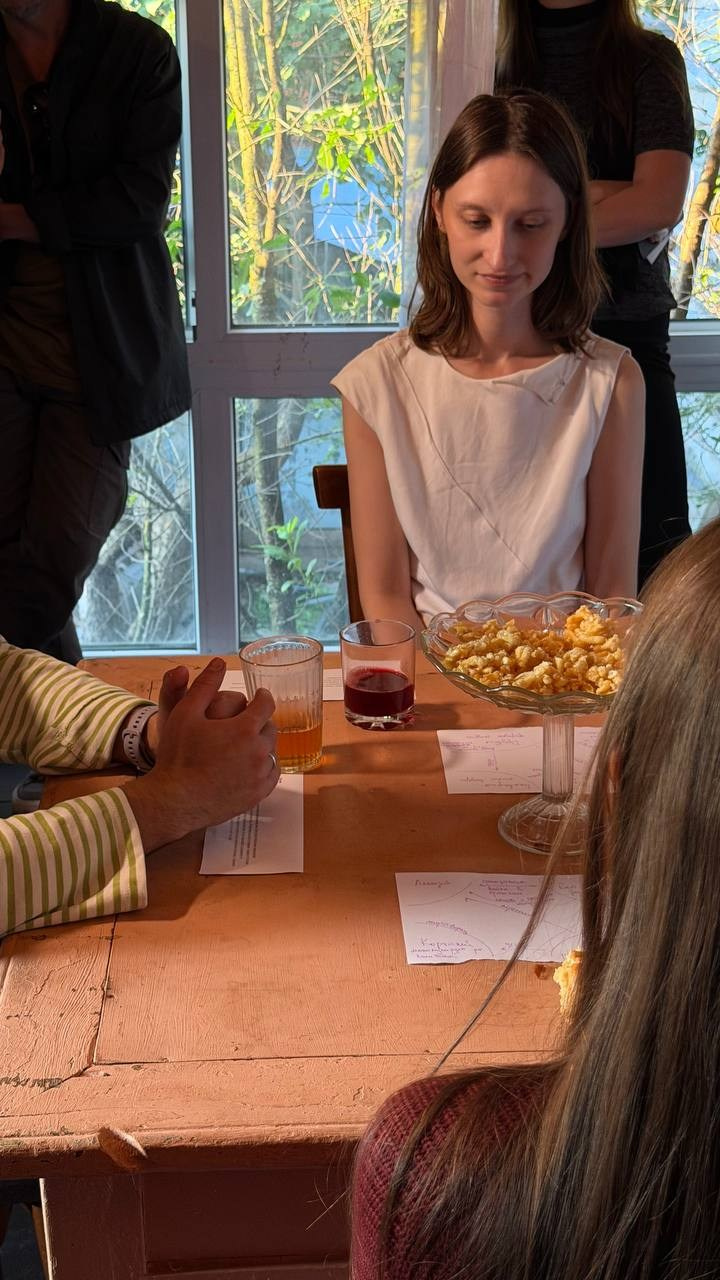
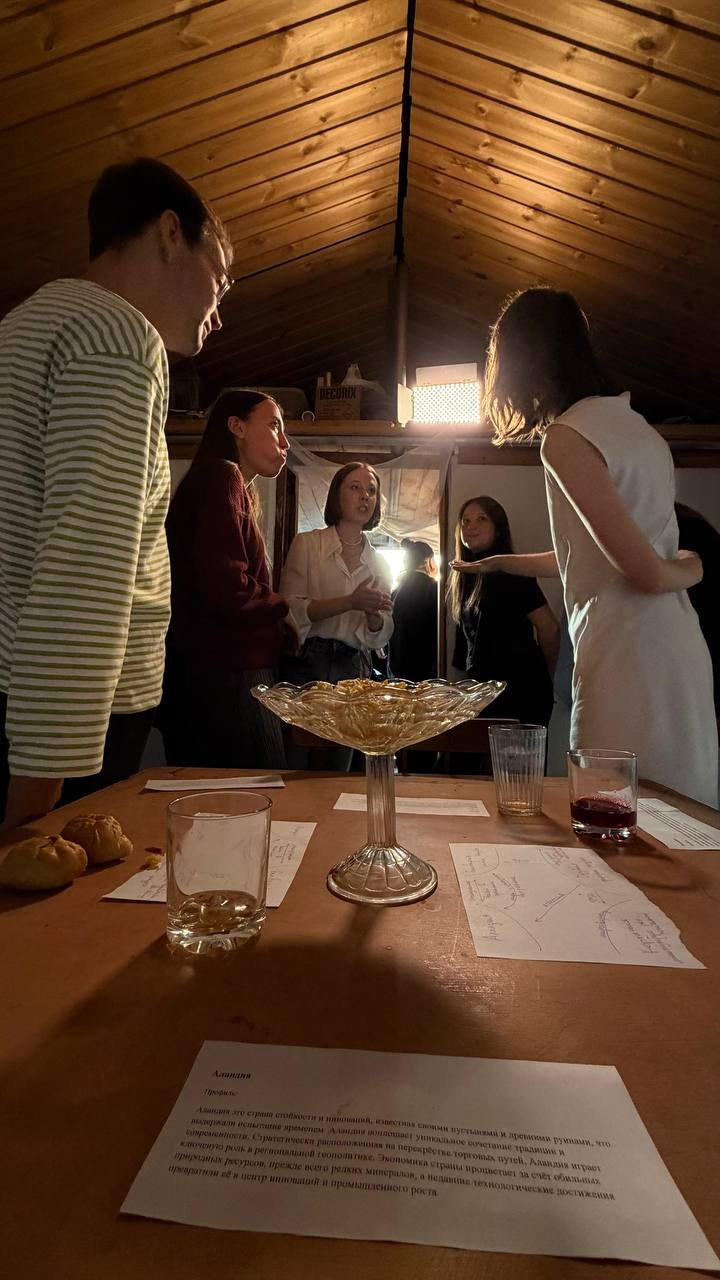
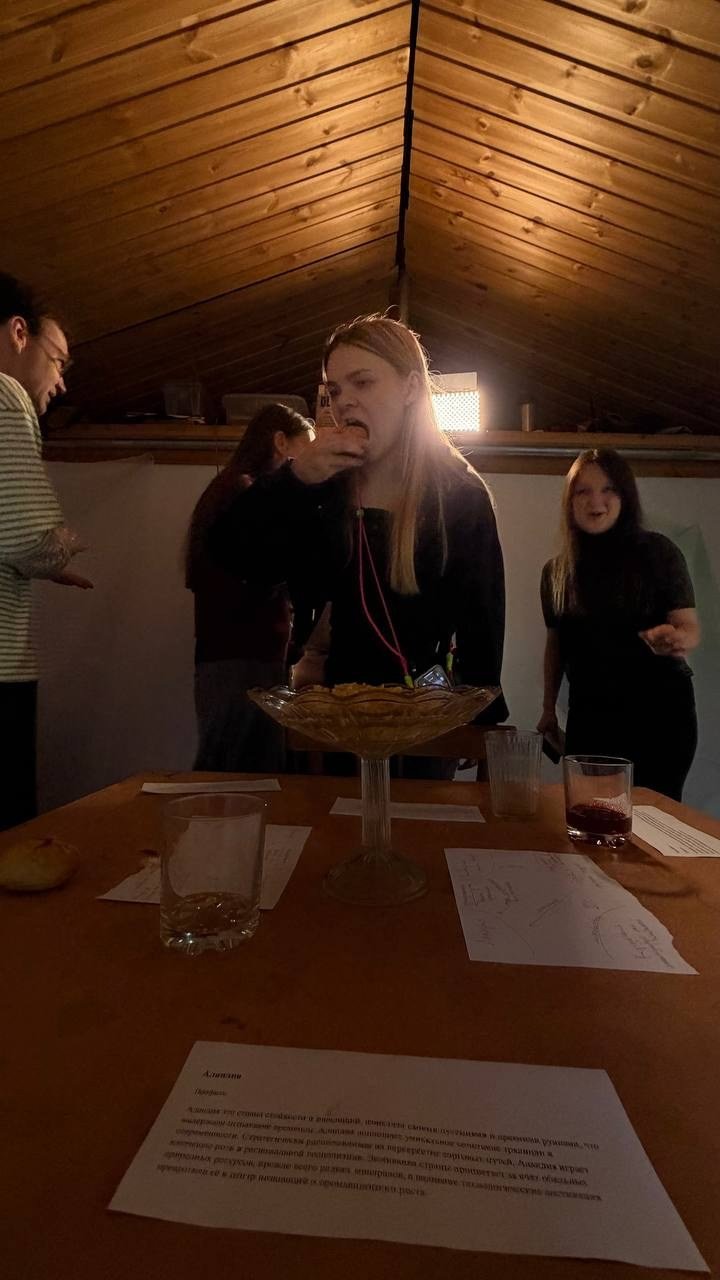
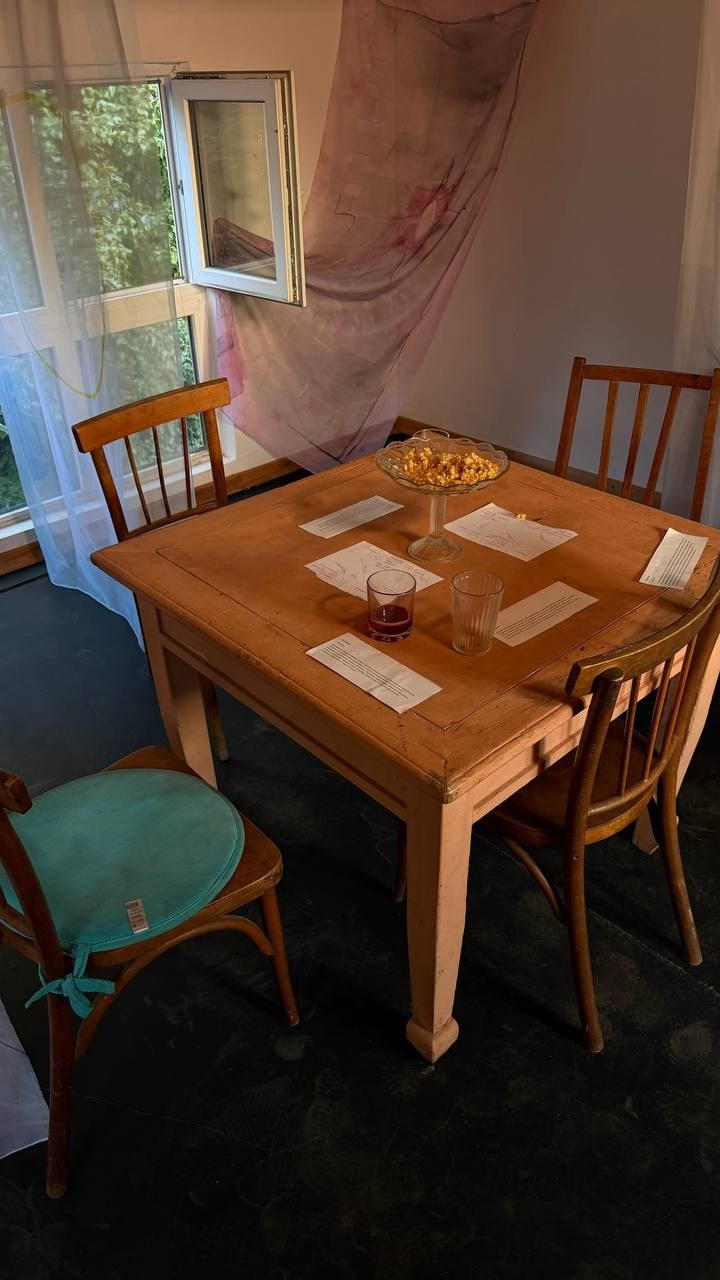
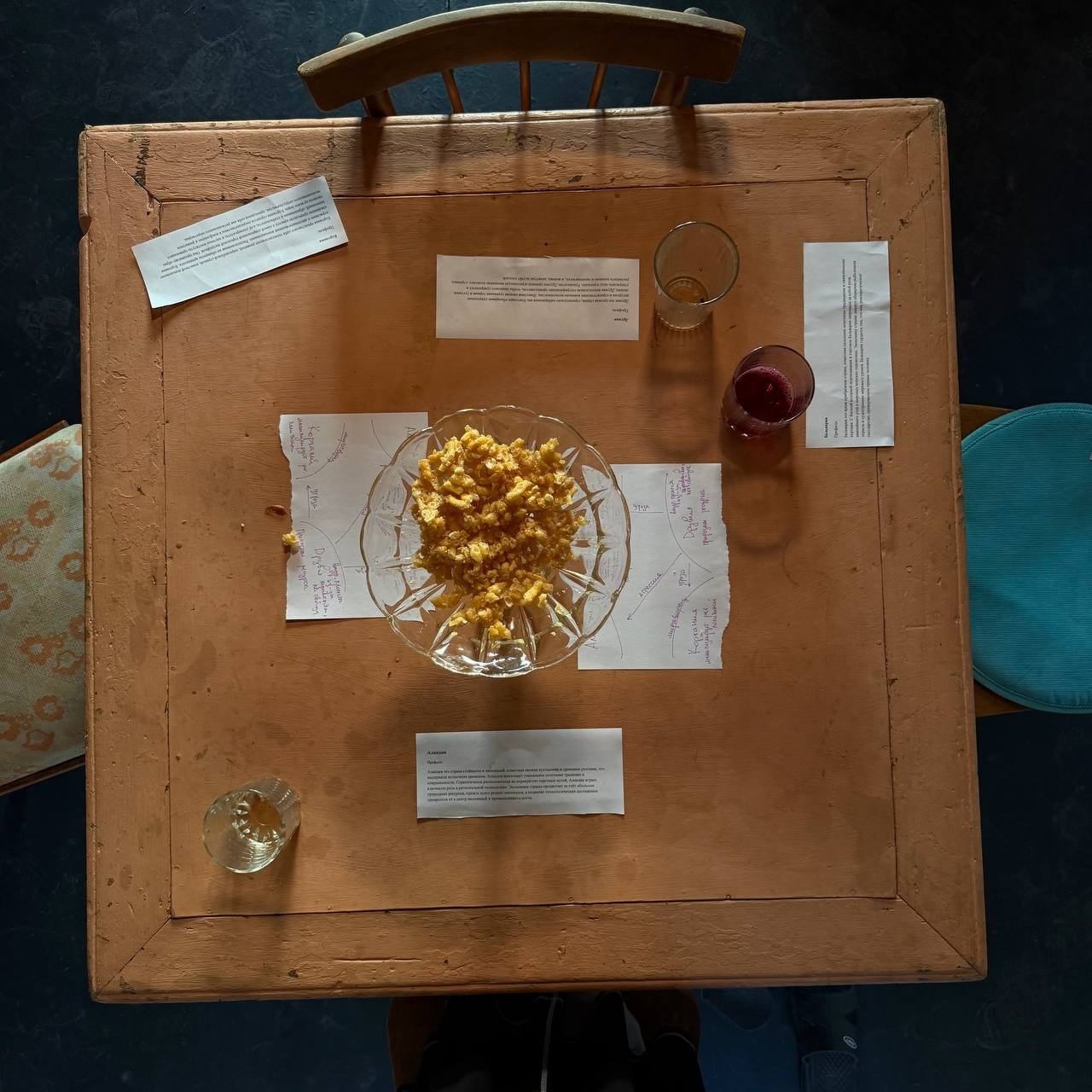
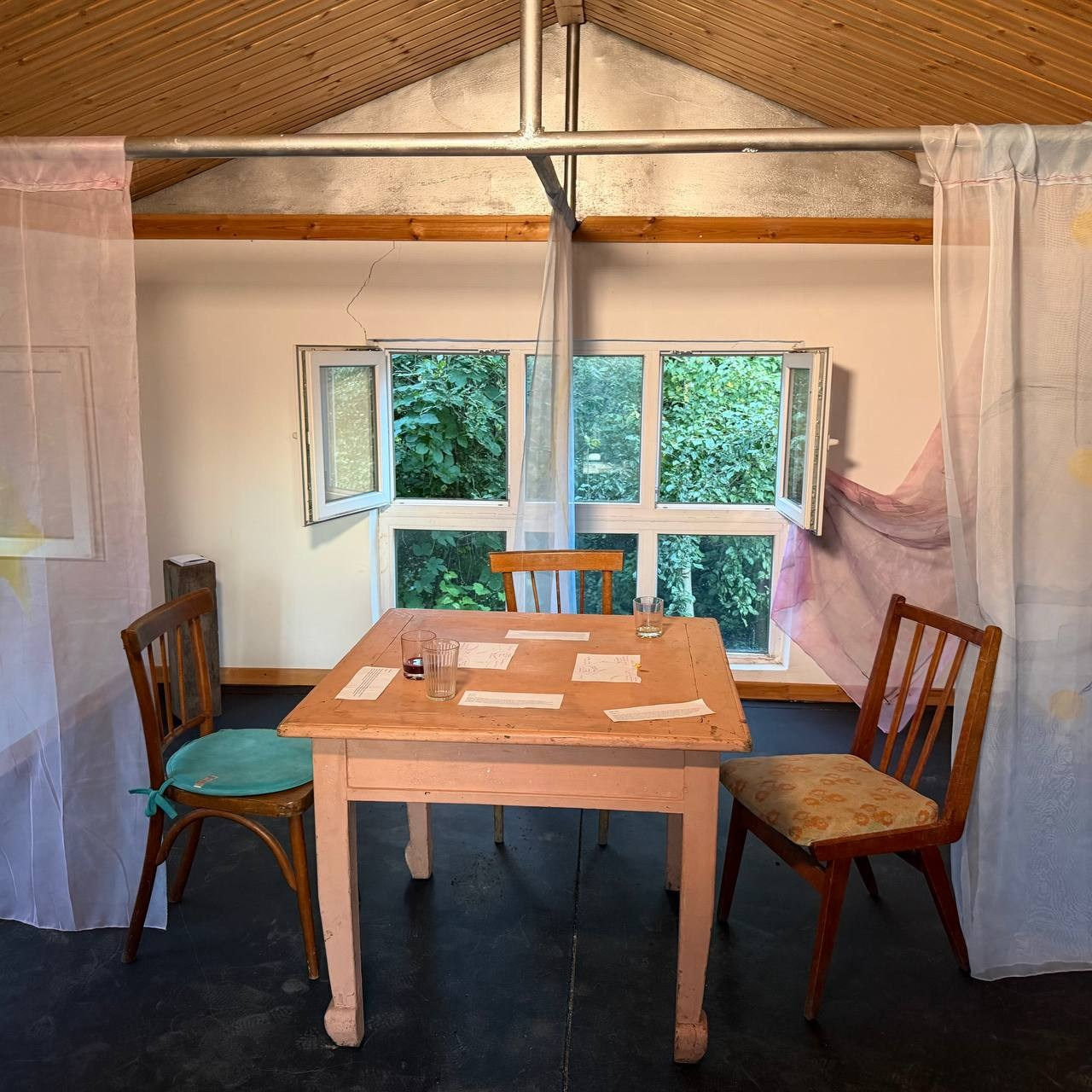
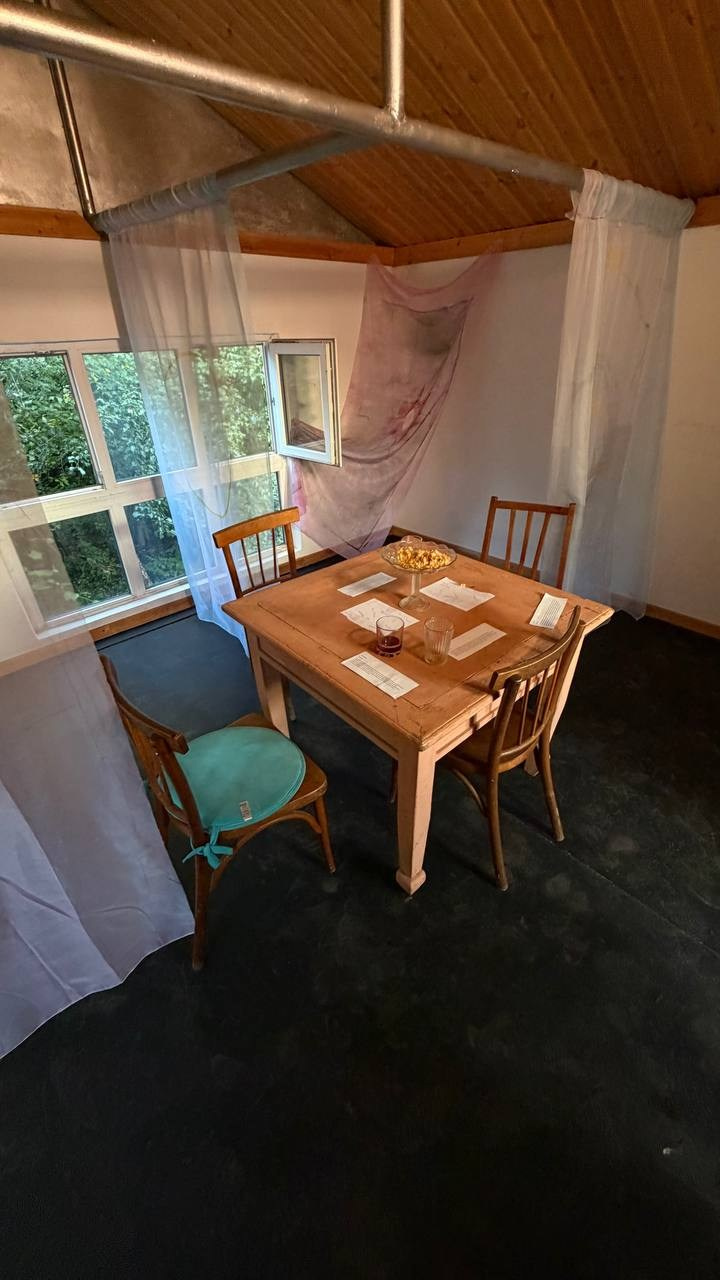
Last Saturday, at the self-organized space SNT Burovik, which belongs to the artist Anna Kondrashova from the Ufa-based group Index, I attended Ekaterina Belukhina’s project “my self үҙаң.” The project also included a performance, Break the Bread, which — apart from quick videos and photos for social media — was not documented
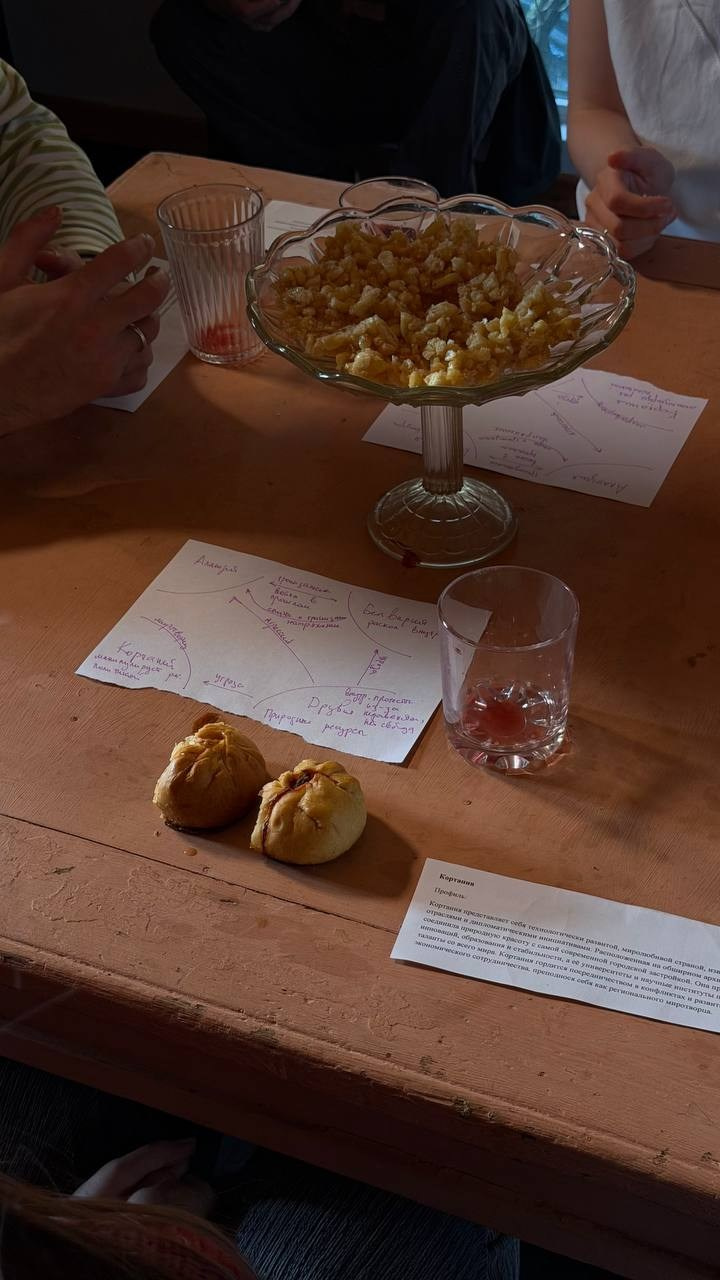
Four participants received descriptions of fictional countries and, for the duration of the action, took on the characters assigned to them. The only condition was the impossibility of eating on one’s own: each depended on the decision and action of another.
The performance unfolded around the everyday gesture of feeding, in which situations of dependency, care, awkwardness, and reciprocity arose. The final shared gesture of breaking bread, built into the structure of the work, never came to pass among all the participants.”
Watching what unfolded, I became curious about how each participant took up the role offered to them without protest. Nelli Akchurina drew the role of a peacekeeping country on a distant island, which, in my view, suits her very well. She didn’t utter a single word throughout the performance, yet fed all the countries without hesitation, even managing along the way to scrounge up some “extra resources” in the form of vak-belyashi (Bashkir pastries) that had fallen off a plate.
After all the participants had settled into their places and turned over the cards describing the countries they’d been given, the voice of an announcer in the corner began reading out the news. This news reported on events occurring in the countries that could affect their relations, and the participants, accordingly, played out their roles with the new inputs.
And here, again, a question: why did everyone agree to play along?
Even when you’re given an environment with some initial role — one that’s assigned, yes, but with a supposed freedom of will — something makes it very hard to step outside that role. A kind of Foucauldian panopticon took shape.
While the participants were deciding how to distribute the resources in the form of food appearing on the plates, no one asked where these resources actually came from.
What kind of generous mother earth was supplying them, and where were they coming from? How many more are there? How much can we spend?
Should we be listening to news coming from some outside source, rather than from those sitting at my table?
Should I give in to provocations?
And so on.
No one strictly enforced the rules and roles; there was no rigid framework, as such, for what was supposed to happen. But the frame “right now you are playing these roles” already turned out to be enough.
At the end of “break the bread, ” the breaking of bread among all the countries never happened, though it can’t be said that the participants didn’t want it to.
After the performance ended, they noted a strong sense of agitation and described their immersion in the roles they’d drawn as a powerful bodily experience.
In conclusion, it seemed to me that we sometimes take the roles handed to us impermissibly seriously. As if “director ” “mother, ” “artist, ” “peacekeeping country, , ” or “person who isn’t allowed to eat from their own plate” were a description of an essence, rather than a temporary agreement. Though even if you’re a director, as a child you ate boogers. It’s worth remembering that from time to time.
By Elvira Saitgareeva